Tracking device or dashcam or both? And what does my insurance provider require? This is the conundrum that motorists face in South Africa. For high-risk vehicles, tracking devices are usually a must-have to qualify for insurance coverage. However, dash cams are mostly seen as a nice-to-have by insurance providers.
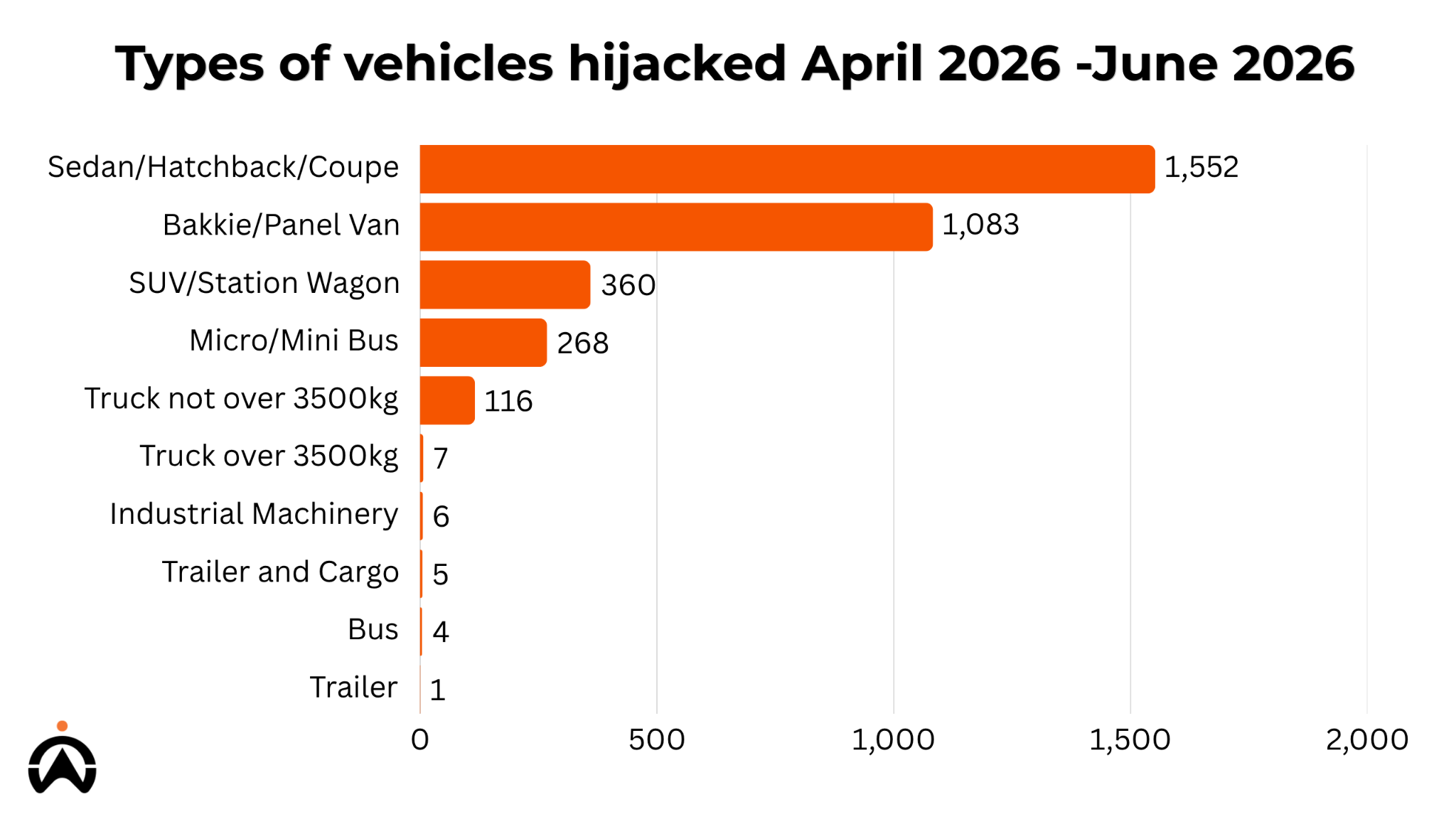
If you're wondering why insurance companies insist on having an extra layer of protection, here’s why. According to SAPS crime stats from April 2026 to June 2026 (pages 8 & 10), there have been a reported:
For those with a high-risk vehicle, having a tracking device, a dashcam or both can provide you with peace of mind and an extra layer of protection, and it can help reduce your insurance premium. Additionally, it can also be a set requirement from your insurance provider if you have a high-risk vehicle.
A tracking device will tell you where your vehicle is and when it moved, making it a necessary tool against theft and hijackings. A dashcam will show exactly what happened on the road, which makes it a vital tool for accidents and insurance claims. It’s important to remember that neither of them does the other’s job.
Here’s a comparison table showing what each device provides and why having them both is best.
This table shows that trackers are more important for insurers because they actually assist with vehicle recovery. However, a dashcam is more important for the vehicle owner because it can prove what happened to you. Together they cover each other’s blind spots.
A vehicle is usually considered high risk by insurance companies when they expect more claims for it than the average. The usual factors that contribute to this assessment are the vehicle’s make, model, and value, as well as where it’s parked, where it’s driven, and how it’s used.
If your vehicle is deemed a high-risk car, you're more than likely going to have tracking device conditions from your insurance provider. Here’s a breakdown of the vehicles that are most commonly stolen in 2026 in South Africa.
According to King Price Insurance:
Tier 1 (Highest reported incident volume)
Tier 2 (High reported incident volume)
Tier 3 (Moderate reported incident volume)
Tier 4 (Consistently reported incident volume)
The location of where the vehicle parks at night and during the day and the route it travels every day all contribute to the “risk” attached to your car by insurance.
For example, if you live in a secure complex with 24-hour security, your car is parked in a garage, and you work from home, your risk value will be considerably lower than someone who parks their car under a carport in a freestanding home and travels 35 mins to work every day.
Fleet vehicles are constantly on the road and often travelling through high-risk areas, and on top of that, they're typically carrying valuable cargo. This automatically makes fleet vehicles a high-risk category for insurance companies.
Your risk profile shapes your insurance quote and cover because it shows the probability of you filing a claim. This is exactly why some insurance providers won’t cover your vehicle for theft if you don’t install a tracking device.
Not all insurers will require a tracking device. However, if your vehicle is over a certain price bracket or deemed high-risk, your insurance provider is likely to insist that you install a tracking device. But remember, insurance companies won’t accept a random tracking device that you found online and installed yourself. They usually have a list of insurance-approved tracking devices.
Insurers will mostly only require an approved tracking device if you:
An approved tracker is one that your insurance provider recognises as a reliable tracking unit. According to Precious Nduli, Chief Commercial Officer at Discovery, if you don’t install a device through an approved provider, your vehicle might not be covered for theft or hijacking. And sometimes your insurer might even require you to have more than one tracker installed.
Currently in South Africa, dashcams aren’t a mandatory requirement by insurance companies. They are, however, very welcomed by them because it assists with claims and can deter theft. So while a dashcam can strengthen your claim and possibly reduce your premium, it can’t replace a tracker.
Having footage removes the he-said-she-said from a claim. It provides undeniable proof that shows the insurance company exactly what happened. However, it’s important to note that footage doesn't guarantee your claim will be paid out in your favour. If the footage shows that you were driving recklessly or speeding, it can be used against you.
Insurance companies love dashcams because they assist with fraud prevention. Staged accidents are becoming more common to try and get money out of insurance providers, and a dash cam provides concrete proof that an accident was set up.
As mentioned, logistic vehicles are automatically high-risk. Their chance of being in an accident is not only high, it’s also usually quite catastrophic, especially for large trucks and those carrying cargo. AI-powered cameras can assist fleet operators with their insurance claims when there’s an accident because they can prove that:
A tracking device and a dashcam work together to answer the main questions your insurer will ask: where the vehicle was and what happened to it. The dashcam provides your insurer with visual proof, while the tracker assists the recovery team to retrieve your stolen vehicle.
Hijacking and vehicle theft are a real issue in South Africa. If you’re ever in this situation, the tracking device will supply the live location data that the recovery team and police need to get your vehicle back. In addition, an in-cabin camera assists as a record of what happened inside the vehicle, which can be used to support your claim.
After there’s an accident, both parties will provide their version of events, and sometimes the guilty party might make false accusations. Camera footage will provide the actual sequence of events:
The main thing about having this footage is not to always win the dispute but to give the insurer all the facts quickly. Remember that this information however, can also be used against you by your insurer if it shows that you were speeding or driving recklessly.
Staged crashes and false claims are common, which is why vehicle data and video footage are so valuable. It can prove that you weren’t speeding or braking harshly and that the other person purposely caused the accident. By having this data, you can prevent your premiums from going up because of an inflated claim.
Footage is only good if it can be trusted. This is why it’s important to get a dashcam from a reliable provider. Because if your device:
...then your device isn’t worth it.
Footage from your dashcam can be used in court; however, you must show that it hasn’t been altered. Good evidence management also means knowing exactly who can access footage and how long it’s kept.
South Africa has very strict data privacy laws (POPIA), and when you have a dash cam, you’re recording people without their consent. However, a camera in your car isn’t illegal, but anyone in the vehicle should be notified if it’s recording them. Additionally, the footage you capture should never be shared publicly and must only be used for evidence purposes.
For fleet owners, you should explain to their drivers exactly what’s being recorded and the purpose of recording. Once they understand that it’s for safety and insurance purposes, they're more likely to be comfortable with being recorded while on the job.
If your insurance provider lists your vehicle as high-risk, start with a tracking device. If you commute daily with your vehicle and there’s a high chance you could be in a dispute or an accident, then install a dashcam as well. Fleets and e-hailing drivers usually benefit the most from having both.
For private owners of high-risk vehicles, start with an insurance-approved tracking device. Ask your insurer if you only need one tracker or if you need a backup one as well, and consider a dashcam to assist with any possible accident claims.
Cartrack has top-of-the-range tracking devices and dashcams at an affordable rate with free installation any day of the week. Our devices are insurance approved, and we have a highly trained in-house search and recovery team to assist with vehicle theft.
If you have a small fleet, having any downtime can affect your profits. Install a tracking device to protect your asset and then get a dashcam to protect you and your driver from any disputes with customers, other motorists, and your insurance.
Cartrack is designed to grow with your business, so it doesn’t matter if you have 2 vehicles or 200. Our tracking devices not only assist with keeping your vehicles protected, but you’ll also receive valuable driver and vehicle insights as well.
E-hailing and delivery drivers would require tracking devices and dashcams for protection, not only from theft and accidents but also from customers who make false claims or become aggressive.
Not only can Cartrack provide you with durable and high-quality tracking and camera devices, but we can also supply you with panic buttons, which are now mandatory for e-hailing drivers in South Africa.
Having multiple vehicles and multiple drivers constantly on the go is a risk for a multitude of reasons. Fleets must have tracking devices to:
AI-powered camera systems that monitor the road, driver and cargo are valuable and necessary to protect your assets and also alert the driver to any risky behaviours such as fatigue and distraction.
Together these devices can assist you with your insurance premiums and claims. Cartack’s tracking and camera devices are connected to a fleet management system so you can have complete visibility of your entire fleet from one platform.
Before you buy your tracking device and dashcam, there are seven questions you should ask your insurance provider. This will ensure you’re purchasing the correct devices that they accept and will actually be useful to you. Make sure you get these answers in writing, because their policy requirements can change and a future claim can be rejected.
Ask your insurer:
Make sure you keep a copy of your policy, your installation certificate, and any other correspondence you’ve received from your insurer about your approved devices. If you change vehicles, move to a higher-risk area, or switch insurance providers, ask the same questions again because the requirements may differ.
For more on how insurance cover and tracking work, take a look at “What You Need to Know About Insurance and Car Tracking”.
For high-risk vehicles, tracking devices are usually a must for insurance providers, while dashcams are mostly a beneficial optional choice. But what’s clear is that a tracking device only tells half of the story, and when you have to submit a claim, having unambiguous evidence is invaluable.
Click here to speak to an agent to see how Cartrack can keep your vehicle protected and help reduce your insurance premium.
Do insurers require a tracking device, a dashcam or both for high-risk vehicles? Compare them side by side and see what protects your claim.