
Fuel prices might go up… but then again, they might go down. Being able to accurately predict what the fuel price will do in the foreseeable future is a valuable benefit for any fleet, but only if you participate in fuel hedging initiatives.
Helpful sites like I Want Fuel try to predict fuel price changes weeks ahead of time. An example of this is their prediction that diesel will drop by R5.84 per litre and petrol by as much as R2.71 per litre at midnight on July 7th, 2026. They use political and socioeconomic indicators to make these predictions but also stay in contact with the Central Energy Fund (CEF) to get accurate price change reports.
What’s helpful about predicting the future fuel price? Well, that’s where fuel hedging comes in. Cartrack is here to guide you on what it is, how it can help you, and what other methods you can combine with fuel hedging to save major fleet costs in your business.
Fuel hedging is similar to making a bet that fuel will go up within a period of weeks or even months. Your fleet can then purchase massive amounts of fuel ahead of time at the current price so that even if the price DOES go up, you still would’ve only paid for yours at the cheaper price.
In short, you get to use what you’ve already paid for, so you’re NOT affected by the increase.
The 3 different types of fuel hedging are fuel swaps, fuel options purchasing, and fuel futures. Here’s how each one works:
The minimum amount of fuel you need to buy in advance varies from one broker to the next, but it’s usually 100 000 litres—sometimes more and sometimes slightly less. However, there are some transport technology companies that offer bulk fuel purchases at lower volumes, helping fleets that are small- or medium-sized.
Yes, there are a number of firms and institutions that offer bulk fuel purchasing in South Africa. These include banks, broking firms, and energy & transport tech institutions. Fuel hedging is a form of investment, so you’d generally be dealing with financial institutions to implement this strategy for your fleet.
Start by contacting your company’s bank to see what fuel hedging options they offer. If you don’t find a happy medium of volume & price, you can always contact a broker to find a more palatable deal. You can also contact FUELZAvings to negotiate a bulk fuel deal that fits your fleet size.
Fuel hedging saves your business money by allowing you to use petrol or diesel at a set price, thereby negating the effects of an increase. If your fleet has multiple vehicles and uses a lot of fuel over the course of several weeks, this can save you thousands of ZAR!

This all sounds good on paper, but if it was such a great way to save on fuel costs, why isn’t everyone doing it? The reason is because fuel hedging does come with some risks. The pros & cons of fuel hedging are nuanced, and nobody has a crystal ball that can help them accurately predict what fuel prices will do in the future.
Here’s a full list of 4 fuel hedging pros and cons to help you make the right decision:
The pro:
If you have the funds available, you can pay now and not worry about any fuel expenses later. Your drivers simply fill up their tanks as & when they need to, allowing your fleet to operate, bring in money for jobs completed, and increase the rate of profit vs expenditure.
The con:
It goes without saying that if you want to partake in fuel hedging, you need a large sum of money. It’s true that you will eventually pay for your fuel at some point anyway, but not all companies have that kind of capital available for a bulk purchase.
The pro:
It seems that the oil price is always going up. With the current global and sociopolitical unrest, it’s difficult to imagine it going down any time soon. Fuel hedging lets you protect your fleet against any further price hikes, also allowing you to offer your customers consistent pricing that isn’t always going up when the fuel price does.
The con:
The fuel price might also go down. If this happens, fuel hedging will have been a bet that you essentially lost. It means you’re now paying a higher price for your fuel while everyone else is enjoying the lower price.
The pro:
Knowing (for sure) that your vehicles burn through a certain volume of fuel each week lets you plan ahead for this by paying for that volume and using it as you need. It’s nice to know that the fuel you NEED is the fuel you HAVE.
The con:
But this is only true if you can predict how much fuel you actually need as accurately as possible. If you end up needing more, you’ll need to make another purchase at the price that’s current. If you buy too much, you still need to stick to your commitment of buying that same volume on repeat.
The pro:
If your fleet is very large and you manage multiple vehicles, fuel hedging is a great way to potentially keep your costs down. That’s because you already have a good idea of how much fuel your fleet uses, how much it costs, and how much your company is bringing in to pay for it.
The con:
Smaller fleets don’t get to benefit from fuel hedging as much as larger ones. While there are some firms that will work out a fuel hedging deal for smaller fleets, the returns are often less significant.
As we’ve seen, fuel hedging is a viable money-saving option—if it’s done carefully and smartly. But is there a way that you can actually use LESS fuel and save money that way?
Let’s find out.
Fuel hedging is about saving money. Fleet optimisation is about saving fuel. This might sound like a pipedream, but it’s actually more effective in giving you a return for your investment in most cases. And yes—IT IS POSSIBLE! Some fleets report a large percentage decrease in their fuel use just by implementing some basic strategies.
This means that fuel price hikes have less of an impact on your fleet—because you’re using so much less of it anyway!
Here are some of those strategies:
One of the most effective strategies to use less fuel across your entire fleet is to implement a driver coaching strategy. This is where you use software, AI, and IoT (Internet of Things) devices to identify how your drivers handle your vehicles and where they’re struggling.
Fuel-guzzling habits may include:
You can minimise all of these with software that guides your driver coaching process to deliver fuel-saving results.
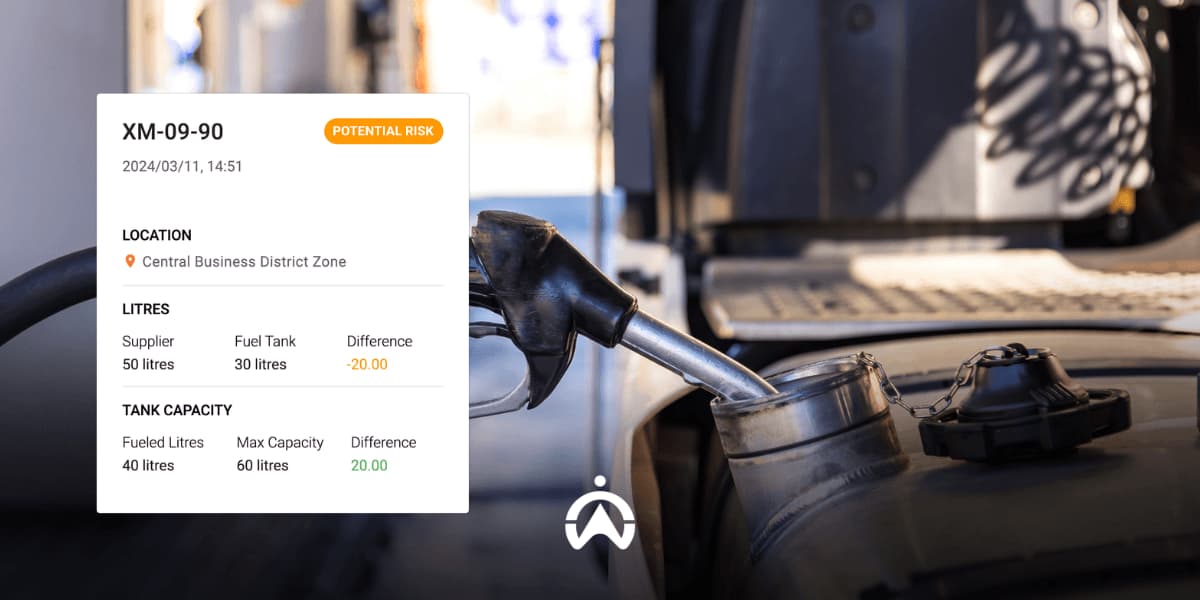
Fleet management solutions are adept at highlighting fuel anomalies like fuel card fraud, fuel tank syphoning, and bad driving habits. And Cartrack’s version of this software uses AI to really get to the bottom of where savings can be made! If you know where your fuel is going, you can make every drop count to the productivity of your fleet.
Much fuel is lost through:
Fleet operators are turning to route optimisation to prevent unnecessary road travel challenges—and it’s making a MASSIVE difference!
A study conducted by Argonne National Laboratory found that switching a vehicle off and on again uses less fuel than 10 or more seconds of idling. This highlights how vital it is for fleet operators to monitor idling.
Software exists for this very purpose—and it’s saving some fleets thousands in fuel costs! Cartrack provides idling alerts, idling data collection, and actionable strategies for your fleet to minimise idling in general.
A vehicle that’s endured prolonged wear & tear WILL burn fuel faster than a well-maintained one. This is where maintenance is often misunderstood, because fleet operators see vehicle services as nothing more than an extra expense—when, in fact, they’re absolutely ESSENTIAL!
Important distinction: Don’t hear what we’re NOT saying. Booking your vehicles in for regular services is NOT the way to do this. A better way is to monitor your vehicles and let AI software predict when your vehicles need servicing and which components need to be focused on.
Read our article on AI-powered predictive maintenance and how it can save you thousands in mechanic invoices.
Fuel hedging is definitely a good strategy for fleets who want to save on their fuel costs. But a much more effective strategy is finding ways to use (and pay for) less fuel.
In conclusion to our deep dive into fuel hedging, we recommend combining these two strategies. Use fuel hedging if it suits your fleet, but also make sure you put strategies in place to consume less fuel.
Over time, both will make a gigantic difference to your profits!
Contact Cartrack to learn more about how to save fuel.
Learn about the different types of fuel hedging, how they can save your fleet money, and what to combine fuel hedging strategies with to save even more.


