
If you start with a sound plan and the right tools, a logistics company can be built from the ground up. It takes work, patience and some trial & error execution, but your transport business can be successful when you’re willing to learn expert traits and apply them consistently.
Don’t leave your logistics business to chance. Implement proven strategies that’ll ensure success, and be willing to learn from those who have already proven what works and what doesn’t.
In this guide on how to start a logistics business in South Africa, we cover:
So get your notepad out and let’s dive in!
Yes, it’s possible to start a logistics company with no money, but let's clarify what “no money” really means. Starting your logistics business and becoming an entrepreneur without funds doesn’t mean you’re running without expenses.
It just means you’re avoiding large upfront costs like buying vehicles, hiring full-time employees, or renting warehouse space.
Sit and brainstorm some good ideas based on solid research. If you want to start a logistics company without funding, don’t skip this step. A unique business idea (or concept) can make all the difference in how you plan, execute and profit off your new transport business.
This report from Stats SA highlights three important points you should be aware of before starting a transport company.
First: You’ll have more success if you choose to operate in Gauteng, the Western Cape, or Kwazulu Natal. These are the three hubs where logistics demand is the highest.
Second: You must factor in overhead costs into your pricing. Expenses like vehicle maintenance, rising fuel prices and insurance premiums should be proactively budgeted for.
Third: Embracing fleet software technology is non-negotiable. Without the tools that come with tracking, fuel management and route optimisation, a new logistics company can’t hope to compete meaningfully.
HOMEWORK ASSIGNMENT: It’s also worth reading through this report on which markets are growing faster than the logistics competition within them. Make notes of the three most notable sectors where market gaps are appearing.
Starting a logistics company without funding isn’t impossible, but it is slower. If you have a solid business plan (see more on this below) and a decent proof of concept, you could apply for financing to speed things along.
What is proof of concept for a logistics business? If you’re applying for a loan from a financial provider, they’ll want to see that you can load products, transport them along a particular route, deliver them to a customer, and get paid enough to make a profit.
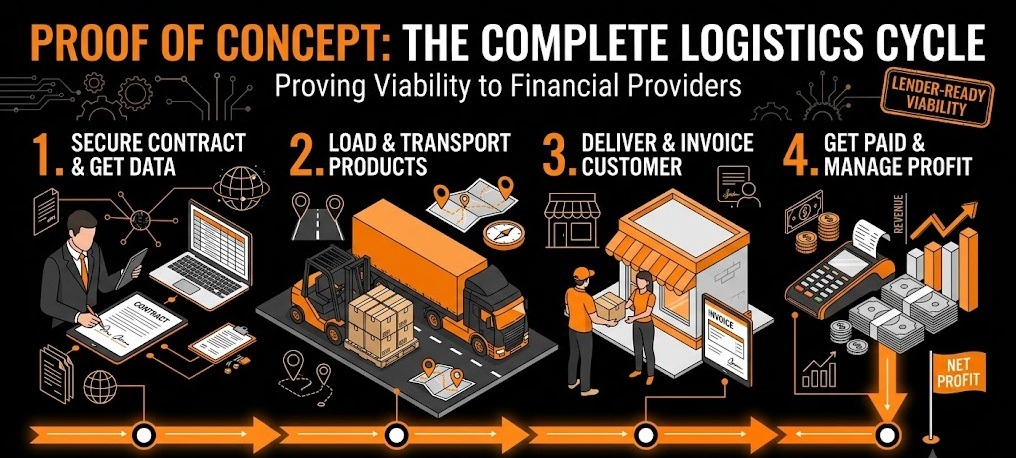
HOMEWORK ASSIGNMENT: Draw up a proof of concept that’s highly-specific. Include details like Rand amounts for the products, fuel costs, compliance, insurance, wear & tear on the vehicle, and what you’ll charge your customer. Also keep the kilometers traveled, driver salary and travel time in mind.
There’s nothing wrong with a bit of healthy competition in the logistics arena. But it’s all about balance. You also don’t want to enter a market that’s already saturated and fiercely competitive.
What’s the difference?
HOMEWORK ASSIGNMENT: Use the above as a checklist and ask yourself if your logistics business idea is truly viable. Include competitors, clients and the industry you’re considering (and its projected future growth) into your analysis.

Before you acquire the first customer for your new logistics business, you need a plan. This is doubly important if you don’t have any capital to kick things off. A sound business plan should include 3 major components:
Let’s look at each of these more closely.
Planning the finances for your new business isn’t just about how much profit you can make, it’s also about predicting overheads accurately. You don’t want to miss any of these, because there’s nothing worse than surprise expenses!
Here are some reminders together with questions to ask yourself.
A vital part of any business plan is recognising how many competitors you have, and who they are. As Sun Tzu stated in The Art of War, "If you know the enemy and know yourself, you need not fear the result of a hundred battles."
CHECKLIST: What should you learn about your competition?
Simply answering these questions will give you strong insights into how you can compete effectively.
What contingencies do you have in your business plan? If you think everything will be smooth sailing, you’re not thinking like a proactive business person. Looking ahead at potential problems is a distinguishing factor between those who reach success despite challenges, and those who are forced to give up when problems arise.
What could go wrong? A lot! But how you prepare makes all the difference.
Not every potential customer you approach is necessarily unhappy with the logistics company they’re already using. But sales is a numbers game, and with time you’ll find your first customer for your logistics operation. From there, it’s important to establish your reputation and build trust.
If you’re starting your logistics business with zero capital, you’ll need to start small. Running logistics can start with basic errands or small deliveries using just one vehicle.
“But I don’t even have a vehicle.” Hiring one can be profitable if the profit you make exceeds the amount you pay for the rental.
“Why would a company trust me with their delivery?” It only takes one shot to prove yourself. Assure your client that you’ll deliver their goods on time and professionally.
“But how do I market myself to a new client with no advertising budget?” Go speak to them directly. If the need exists, chances are you’ll get your chance sooner or later. Don’t give up!
“Why would a new customer trust me with their goods when they’ve never used me before?” You should first establish yourself with a professional looking Facebook business page. Invite your client to post a review once the delivery has been completed.
REMEMBER: Urgency has a way of creating opportunity. Leave your details with various customers and start slow. Build up trust bit by bit. Again… you only need one shot!
At some point you’ll likely be needing drivers, packers or warehouse managers for your logistics operation. A system will begin to take shape as you identify efficient ways to move goods from one point to another.
But as many have remarked, managing staff can be tricky.
They’re not always as invested in your business as you are. For many, it’s just a job and a paycheck. In reality, they represent your brand, your reputation, your livelihood. It’s only natural to make sure they’re not tarnishing your brand once out on the road.
By this point you should be turning some form of profit. But now it’s time to take your profitability to the next level. This is where you can learn from larger, more established logistics companies.
What are they doing to maintain driver accountability?
Most invest in driver monitoring systems like vehicle cameras, coaching software and vehicle alerts. Not only do these highlight driver-related problems in real time, they also direct your coaching in ways that enhance your operations and protect your brand.
Staff duties pertaining to logistics operations should be automated and seamless. That’s why established companies also invest in central systems that create workflows for them.
Logistics management soon becomes as simple as sitting in front of a computer screen and knowing what’s going on without having to leave your chair.
Once your system is in place and your staff understand what’s expected of them, you’ll want to maintain a certain level of momentum. To avoid breaking the flow of your services, there are several things to look out for—especially as you start to grow.
Just because there’s more to do, that doesn’t mean you have to do more!
Automation is the name of the game. It’s time to take all those moving parts and put them in a system that runs itself. This is where AI comes into play, and it’s revolutionising the logistics sector in South Africa right now.
This report shows that AI is the future of logistics and fleet management in South Africa. 23% of South African fleet managers are already using it and seeing amazing results!
This study explores the benefits of AI in fleet software for companies just like yours! This includes better vehicle & driver visibility, quicker routes, and even more efficient maintenance strategies.
So once your logistics business is running well, keep it optimal by doing what the big companies are doing.
External factors like fuel prices, crime and market changes are the same challenges other companies have to deal with, but your business will be more vulnerable because it’s less-established.
Crime is actually the big one here. Criminals prefer to target company vehicles over private ones. Why? Because they’re easier to steal, and often contain cargo that’s valuable.
Yes, insurance is important. But what’s cheaper and more important is vehicle tracking coupled with reliable recovery. You simply must protect your assets, because they are what keep your company running.
It’s a question of risk. How much more are you paying your insurance company for having a high risk profile? Are you doing everything you can to keep that risk profile low?
The only way is to partner with the right software provider. That’s what we’ll explore next.
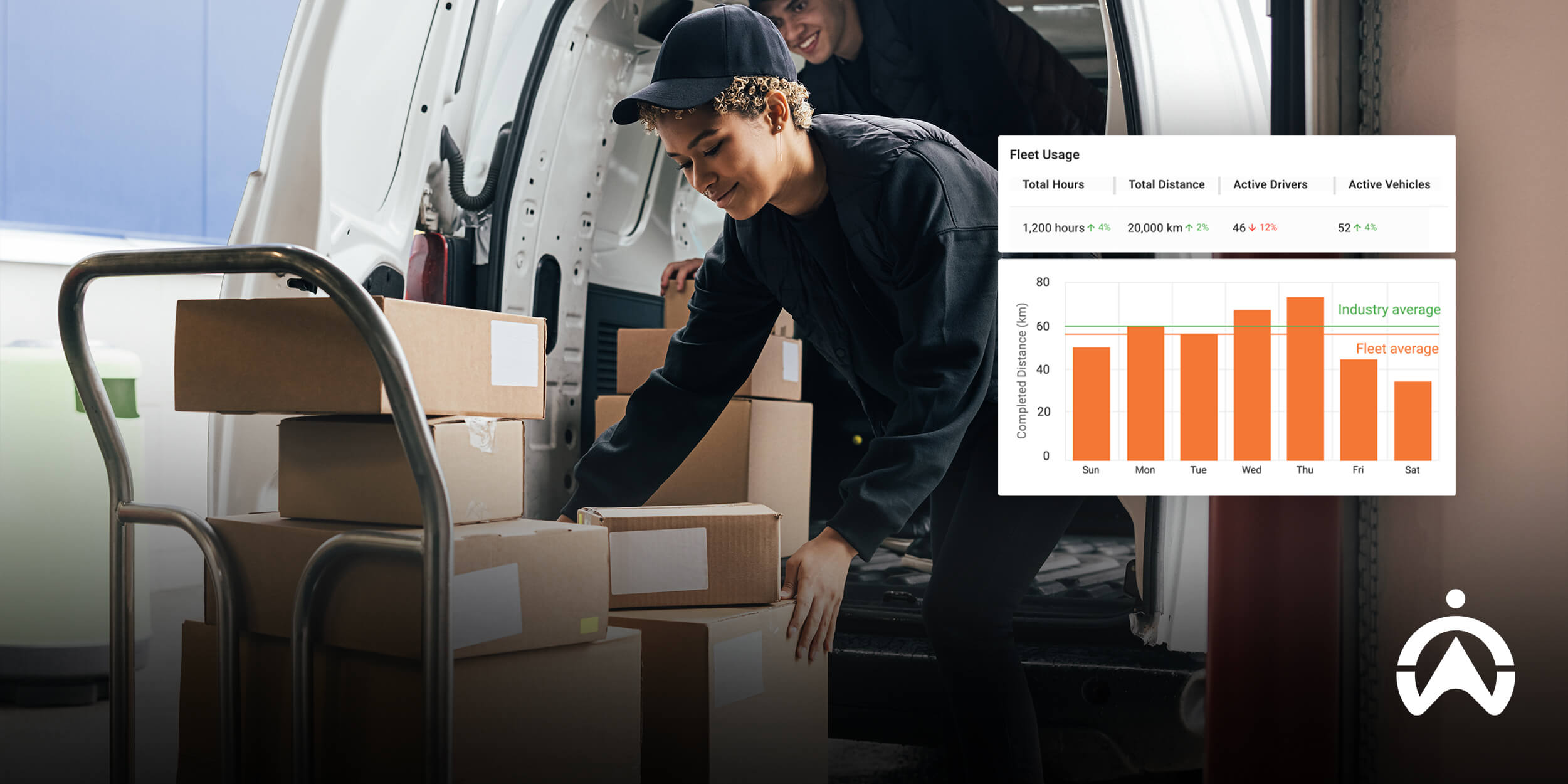
“It’s not what you know, it’s who you know”. This is especially true in the logistics sector, where having the right or wrong partner can make or break your operation. Technology providers, freight brokers and back-up driver- or space providers are all essential partners you should consider.
We’ve already spoken a lot about fleet technology and how AI integrates into your operations. Choosing the right provider of this type of software is just as important as the software itself.
You need to rely on ongoing support from your provider, so choose a technology partner that:
Freight brokers are a dream-come-true for logistics companies trying to start with no capital. They highlight where your services are needed and set you up with companies that need urgent deliveries RIGHT NOW.
As you deliver for these customers, you build trust and opportunities to work for them more consistently.
During busier seasons, it’s easier (and cheaper) to use qualified drivers on a part time basis rather than having to hire new ones on permanent contracts. There are plenty of these agencies in South Africa, and some are top rated.
Online warehouse sharing platforms give you storage options when you need them in a pinch. They also let you offer cross-docking services to customers. You won't have to commit to anything long-term—it's there when you need it, which is perfect for a starter logistics company like yours!
Keeping an eye on finances can be a full-time endeavour within any new business, and logistics is no different. Money will be moving in and out all the time, and knowing whether your logistics business is staying profitable can be very nuanced.
Throw out those paper invoice sheets and accounting ledgers. Go digital instead! That’s how all the big logistics companies are doing it, so you may as well start off doing it the right way.
The same fleet management software that monitors your drivers, protects your vehicles, and automates your deliveries, can also manage your financial records. If you want a big-picture view of how your fleet is doing, then dispose of those human-error-prone methods and opt for a solid digital fleet finance management system.
Identify what’s really going on. Financial decisions are likely the most important ones you’ll make for your new logistics company, so make sure you’re making the right ones.
Some of the most established logistics companies in South Africa have figured out one thing that’s kept them successful and profitable: technology saves time, money and effort.
Choosing a provider like Cartrack puts your new logistics company ahead of the rest. We offer AI-integrated fleet management systems that can propel your business from a starter to an industry powerhouse.
We also include a package that includes what your fleet needs as & when it grows. This could include:
How to start a logistics company from scratch. First…
...talk to us today and get a logistics management package that suits your budget, and learn how to start logistics operations from scratch with the right technology.

Learn the beginning steps of starting a logistics company and what management tools you need to make and keep it successful.

.jpg)