
Predictive maintenance helps save fleets thousands by notifying fleet managers of worn-out or faulty vehicle components before they worsen and cause breakdowns. Unexpected repairs usually cost more than the expected ones because they require immediate attention. This means you won’t have enough time to research and compare quotes; plus, it delays productivity.
The growing cost of fleet operations needs you, as the fleet manager, to find better ways to cut costs. With maintenance being one of the major expenses, predictive maintenance technology is what you need. According to Fynd statistics, predictive maintenance can reduce fleet maintenance costs by up to 30% by 2030 through early fault detection and good servicing schedules.
Let’s have a look at the positive changes predictive maintenance technology will bring to your fleet and why you need it.
Predictive maintenance can save you thousands by:
If your business solely depends on fleet operations, your vehicles and drivers are your business’ greatest assets. This means that poor handling and maintenance of your vehicles will directly impact all other areas of your business.
Let’s get into more detail on how predictive maintenance technology helps you spend less:
Unexpected breakdowns dent the budget in so many ways. From the roadside assistance call-out fees and paying the mechanic, to the cost of outsourcing vehicle parts that might not be immediately available. You also face the possibility of getting financially penalised for late deliveries.
The early detection of mechanical failures or wear and tear through predictive maintenance software helps you avoid all these expenses caused by surprise breakdowns. In the long run, the money you’ll spend fixing vehicles early will be less than what you could possibly spend if you just wait for them to start falling apart.
Every hour a fleet vehicle is off the road, there’s a loss in revenue. For many fleet businesses, there are peak and off-peak periods. Imagine owning a fleet of 50 delivery vans, and 10 of them suddenly need emergency repairs during the festive season. This will result in a significant loss in revenue, as it’s the busiest time of the year for delivery businesses.
Predictive maintenance insights allow you to plan and schedule repairs during off-peak hours, giving you minimal disturbances.
Spotting issues with vehicles early protects critical components like the engine, which results in vehicles lasting longer before the need for a replacement. It also helps you know which vehicles will soon need replacing, so you'll have enough time to plan and budget vehicle acquisition.
Things like worn-out brake pads, clogged air filters, and low tyre pressure lead to the engine having to work harder, which then requires more fuel. With fuel being another major fleet running expense, saving fuel costs in all ways possible is a must. By picking up issues of wear & tear early, predictive analytics help decrease fuel consumption. A better fuel economy equals more savings.
According to DSC Attorneys, the top five mechanical failures that cause car accidents are:
Since predictive maintenance technology can pick up some of these ahead of time, it helps prevent such accidents from happening, saving the lives of your drivers and other people on the road. Fewer accidents also mean fewer insurance claims, so by reducing the risk of accidents, you appear more reliable to insurers, which then results in lower premiums in the long run.

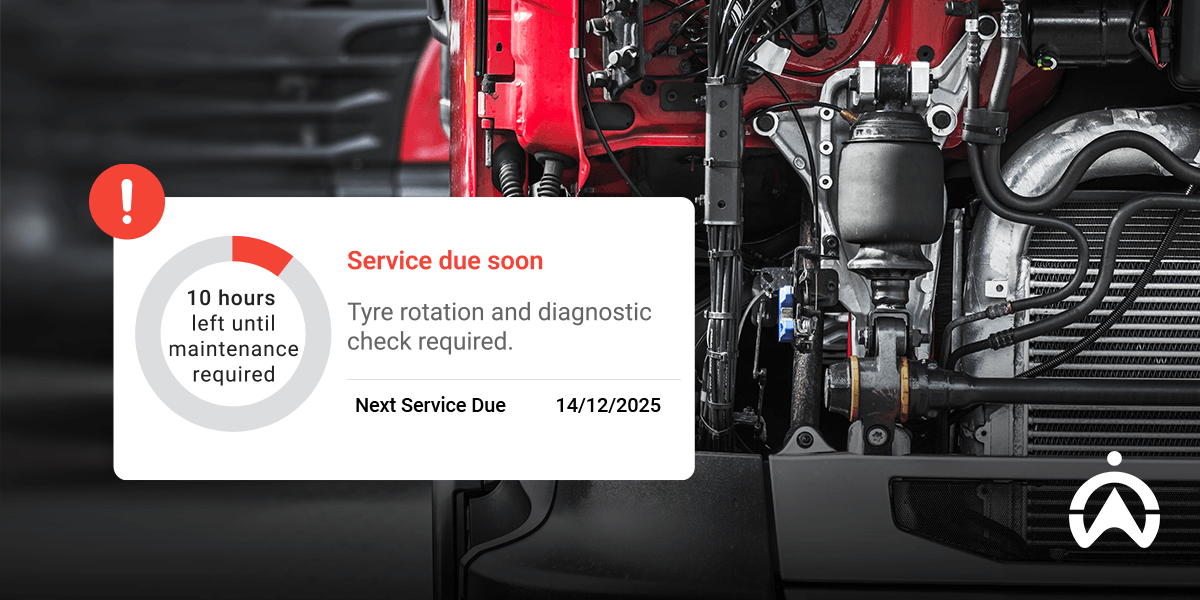
Predictive maintenance works through data analysis. The data comes from telematics devices and sensors. Through these technologies, the system can follow the patterns of different components to notice unusual behaviour, which could be an early sign of wear & tear. The system then sends out alerts of these faults, so you can attend to them before they cause breakdowns.
Let’s look at the three main components of predictive maintenance.
Telematics systems collect a vast amount of data from the vehicles to the central system. Through this, you can get more information on things like odometer readings, driving habits, engine conditions, battery health, and tyre pressure.
IoT sensors make it possible to continuously monitor critical vehicle components. They typically keep an eye on things like the temperature, pressure, or vibration of certain parts. You’ll often find IoT sensors around the engine, brakes, suspension system, or the electrical circuit. They work together with telematics devices for the transmission of information.
You’ll find AI technology in nearly every smart innovation these days, and preventive maintenance is no exception. AI analyses sensor data and looks for patterns in order to predict potential failures. This part of AI that focuses on learning the patterns of vehicle components is known as machine learning.
No, the terms 'preventative maintenance' and 'predictive maintenance' are often used interchangeably, but they aren’t the same thing. The difference between the two is that preventative maintenance focuses on sticking to service reminders to keep your fleet in top shape. Predictive maintenance is about anticipating vehicle issues through sensors, AI, and telematics devices.
So basically, predictive maintenance can be seen as a type of preventative maintenance method.
At Cartrack, we offer remote diagnostics and real-time maintenance alerts to help you cut down fleet costs and improve productivity. With us, you get an entire preventative maintenance system, which includes things like scheduling reminders and risky driving alerts.
Here’s a closer look at how our system works.
Remote vehicle diagnostics simply means that our system can collect data using sensors and onboard computers from various vehicle components, like the brakes, transmission, and engine. From there, you’ll get alerts of faults from those vehicle parts and take necessary action. For example, if your brakes are worn out, the system will notify you, and you’ll be able to replace them before they fail.
With our fleet maintenance system, you can create vehicle inspection forms that drivers can access via the Cartrack App. Each driver can then fill out the form to check for worn-out parts of the vehicle they’re using for the day. This can be done before starting a trip or afterwards.
Drivers can even take photos of the worn-out parts and upload them to the app. You’ll receive all the submitted forms and all other supportive evidence so you can see which vehicles have parts that need to be repaired or replaced.
You can import the owners' manuals for all your vehicles and their service history reports into your system so you can have a digital record of service dates and get reminders. This ensures that you have all your vehicle maintenance-related information on one platform, instead of having to search through spreadsheets and emails to keep up.
Wisani Burial Society is a funeral business from Limpopo that was established in 1995. Their main goal is to offer affordable and reliable funeral services to diverse communities. Their services stretch as far as Mpumalanga and Gauteng, and they rely on their fleet’s efficiency to provide high-quality funeral services.
Wisani Burial Society had challenges with making timely deliveries. Things like hot weather, traffic, and vehicle breakdowns have serious repercussions, given the sensitivity of the contents they transport. They needed a system that could help them easily locate their vehicles and avoid delays so they could meet customer needs. So they invested in the Cartrack fleet management system.
Here’s how we helped them:
At peak times, Wisani Burial Society can monitor over 300 vehicles simultaneously through their control room using our web platform. They can see the exact whereabouts of all vehicles and track productivity. It also makes it easy to quickly dispatch assistants in case of a breakdown.
Our real-time vehicle diagnostics and scheduled maintenance reminders help them quickly see which vehicles need maintenance and when. This way, they can reduce the chances of breakdowns and optimise vehicle usage.
Our predictive maintenance tools and preventative maintenance system make it easier to stay in touch with fleet upkeep, saving your business from setbacks that can cost thousands. You’ll not only save costs but also the lives of your drivers. Reach out to us and get a vehicle maintenance system you can trust.

Find out how predictive maintenance uses sensors, data, and alerts to stop costly breakdowns, extend vehicle life, and cut fleet operating costs.