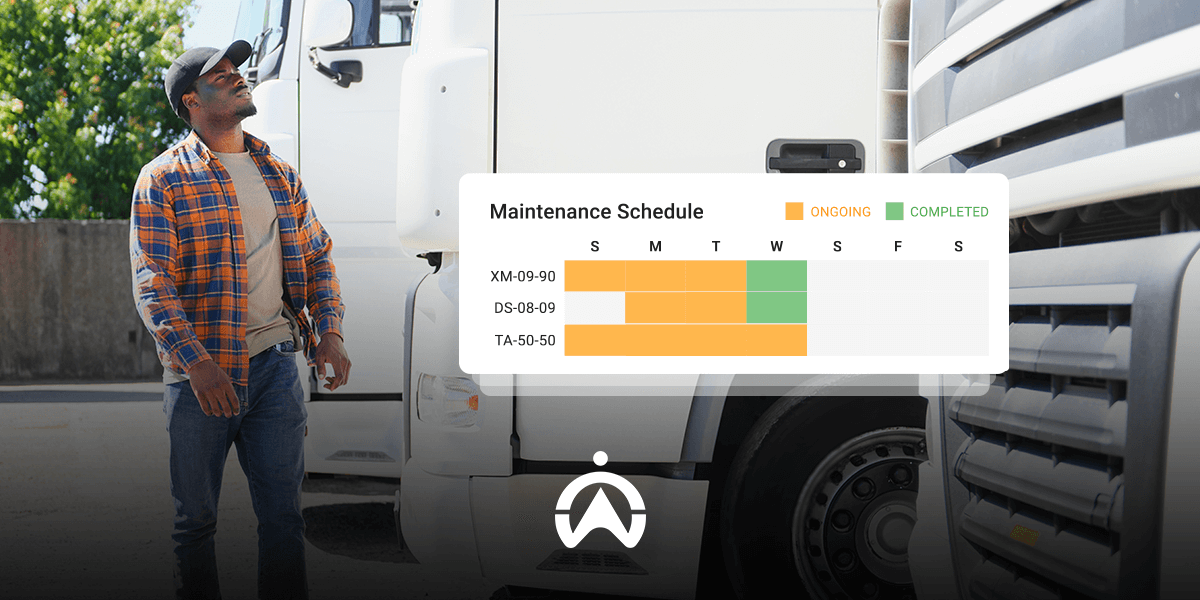
Wondering how predictive maintenance works? Check out our list of the most commonly asked questions about this important fleet management component and find out how it can transform your fleet operations.
Predictive maintenance saves you money by giving you early warnings of mechanical failures or vehicle wear & tear. This saves on the cost of emergency repairs and downtimes. It also increases vehicle lifespan, saving you from the cost of having to replace entire vehicles.
Predictive maintenance is a maintenance strategy that involves monitoring the real-time conditions of vehicle parts using telematics devices, sensors, and artificial intelligence (AI). Together, these technologies can forecast how your vehicles or equipment might perform in the future. In doing so, they help you reduce unexpected breakdowns, ensuring that you plan your maintenance better and save on expensive repair costs.
AI collects and analyses data from vehicle sensors and telematics devices. It pays attention to patterns to spot irregularities. This allows for the early detection of vehicle faults so you can fix the issues before they worsen.
Cartrack’s fleet system drives uptime optimisation by offering preventative maintenance solutions like service reminders, real-time diagnostics, and digital inspection reports. Through these solutions, you’ll always be a step ahead when it comes to the health of your fleet, reducing the chances of breakdowns and increasing uptime.
Predictive maintenance in logistics fleets reduces equipment downtime and operational costs by assessing the health of vehicles and equipment in real time to identify issues early. The early detection of equipment failure prevents surprise breakdowns, which cost more and lead to vehicle downtime.
The 10% rule of preventative maintenance suggests that you should carry out your vehicle maintenance within 90% of the scheduled time and not exceed 10% beyond the due date. For example, if there’s a maintenance task that needs to be done every 30 days, aim for it to be done within 27 days, but no later than 33 days.
The benefits of predictive maintenance include:
Predictive maintenance gives you data that helps to ensure your fleet runs smoothly, therefore improving overall operational efficiency, reliability, and safety.
You should choose Cartrack as your solution for fleet maintenance because Cartrack offers a variety of preventative maintenance solutions that help reduce costs and increase uptime. With us, you’ll get early warnings of worn-out vehicles and mechanical failures, as well as driver monitoring tools that’ll help your drivers handle vehicles better.
To help you manage your maintenance better, you can use automation tools such as:
Your fleet inspection list should include vital vehicle components like the lights, tyres, brakes, steering wheel, battery, seatbelts, fuel levels, and windscreen wipers. Performing routine inspections is essential, as it improves safety, ensures compliance, and enhances productivity. We discuss this in detail in our blog about pre- and post-trip inspections.
To ensure fleet uptime, fleet managers should develop a preventive maintenance strategy. This strategy should involve predictive maintenance technology, policies, and proactive maintenance measures like performing routine inspections and sticking to vehicle service dates. Through this strategy, there’ll be fewer unexpected breakdowns and better planning, ensuring uptime.
The types of predictive maintenance are: