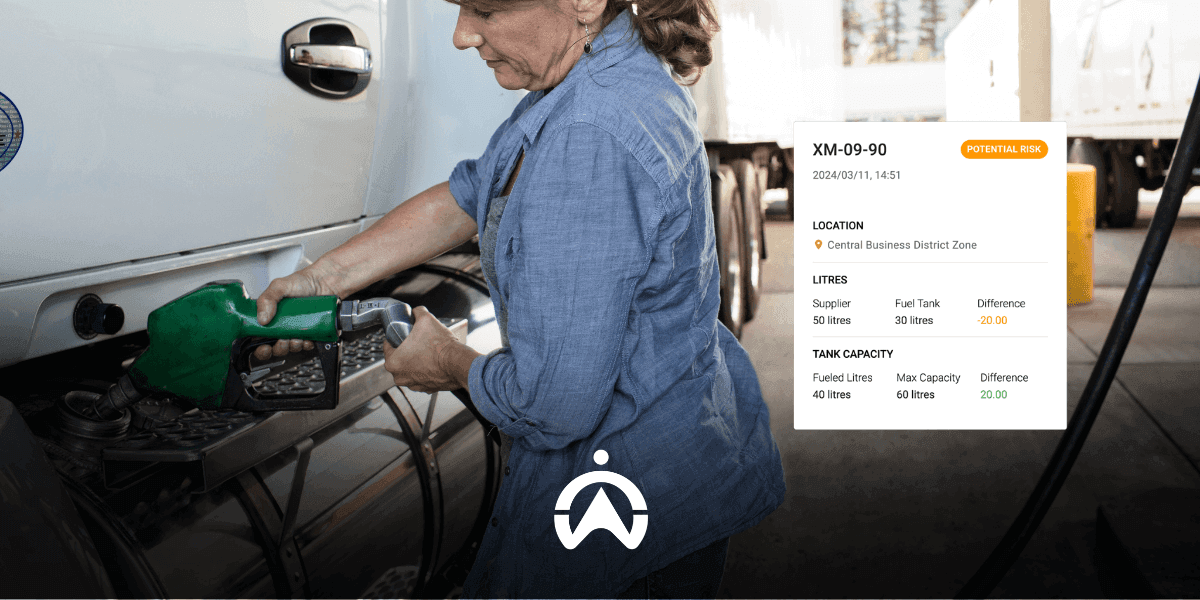
Is your fleet of trucks leaving a trail of fuel behind them everywhere they go? Or is your fleet spending way too much money on fuel than you originally budgeted for? Fuel leaks and loss are a major player in how much fleets are spending on fuel.
This FAQ is here to answer all your questions on fuel loss and leaking and what you can do to prevent it!
To find a leak in your fleet of trucks, you need to do physical checks in and around the vehicle and maintenance checks on the parts that can leak fuel. You should also invest in a fuel management system that can alert you to any anomalies.
This would depend on where the leak is and what’s causing it to leak. If it’s a crack in the injector line or fuel tank, it would need to be sealed or replaced depending on the damage. If your fuel is leaking through the fuel cap, it would need to be replaced and tightened.
Technically yes, you can; however, legally you’re not allowed to. This is because a fuel leak in your truck makes it a hazard on the road and therefore no longer roadworthy. So you can be fined if you’re caught driving with a fuel leak.
The symptoms of a fuel leak are:
Loss of power
Smell of fuel around the vehicle
Puddles under the vehicle after it’s been stationary
A fuel gauge that’s dropping faster than usual
Engine knocking
A rough idle or heavy vibrations when idling
A fuel management system can help with fuel drops or leaks by telling you the difference between theft and a leak. The combination of GPS location, the vehicle’s CAN Bus and fuel sensors gives fleet managers an exact time, date and location of when fuel dropped and how much was lost.
Cartrack’s fuel management system can assist with insights into fuel loss detection and fuel theft. However, when it comes to fuel leaks, some of the places where fuel leaks occur need actual physical checks, like a worn-out O-ring. So our system can definitely show you that you’re leaking fuel, but sometimes it can't tell you exactly where the leak is happening.
Fuel theft is something that happens instantly, and it would show as a huge jump in your fuel levels. A fuel leak, however, isn’t that noticeable. It would show up as a gradual drop in fuel or a lack of power in your truck.
Unfortunately, not all failures are predictable, even with a proper maintenance programme. A fleet maintenance programme can help a lot to reduce your chances of a fuel leak, but external forces still play a major role. For example: your truck could be driving on a dirt road, and a rock could hit and crack your fuel tank, creating a leak.
Yes, Cartrack does help with roadside emergencies if you have an active tracking unit with the Protector add-on. With Protector, you’ll have access to:
Roadside Assistance
Family or friend contact
Tow service
Emergency medical service
Depending on how drastic the drop is, it can take anywhere from a few minutes to a few hours. A sudden drop would send you an immediate alert. A slow decline in fuel that’s abnormal will show up in your end-of-trip or daily reports.
Leaks in your fleet are caused by age, wear and tear, harsh environments, operational stress and driver behaviour. Unfortunately fleets are constantly on the road, carrying heavy loads and in tough environments. All of these add stress to your vehicle and the components that carry and push fuel to your engine.
The common faults associated with the fuel system in your vehicle are:
Fuel pump failing
Fuel injector faults
Fuel pressure errors
Filter and water separator failures