If you're wondering what causes most of the accidents you see on the road and how you can avoid them, you’ve come to the right place. Have a look at these commonly asked questions and see what actions you need to take.
The safest speed to drive a car on a public road depends on where exactly you’re driving. The key is to always adhere to the road speed limits. In urban areas, you should travel at 60 km/h. On public roads outside an urban area that aren’t motorways, it should be not faster than 100 km/h; and if you want to be safe on the freeway, your speed shouldn’t exceed 120 km/h.
Yes, tailgating is one of the leading causes of accidents. If the car in front of you suddenly stops while you’re still moving ahead, you’re going to bump into it. The road is unpredictable, which is why you should always keep a safe following distance.
The first thing to do after an accident is to check if you or anyone else is hurt. If there is, then call the emergency services immediately and don’t move the injured person because this might make things worse. If no one is injured, you must:
Avoid driving at high speeds when there’s heavy rain, dust storms, thick fog or any other extreme weather condition. Increase your following distance to 5 to 6 seconds instead of 2 to 3 seconds when the roads are slippery. If you can’t see the road while driving, stop where possible and wait for the conditions to get better.
Always drive responsibly, follow the road rules, keep a safe following distance, and don’t forget to pay attention to your blind spots. If you want technological assistance, then you should get a dashcam with AI technology. This way, you’ll get early warnings of accident-causing actions, helping you to prevent it from happening.
Most accidents happen:
The 3-second rule is a guideline for safe following distances to prevent rear-end collisions. The rule states that there should always be a 2-3 second following distance between your vehicle and the next so you have enough time to react to sudden changes.
Teenagers aged 16-19 are more likely to be involved in accidents. Young drivers lack experience and make a lot of mistakes on the road. As a parent, you can install dashcams in your vehicles to monitor their behaviour and coach them on better driving habits.
The only way to prove that you were not at fault in an accident is by providing credible evidence. This evidence can be pictures showing the damage, eyewitnesses explaining what they saw, or dashcam footage that clearly shows the moments leading to the accident. Over recent years, dashcams have proven to be the best way to prove your innocence because they provide indisputable evidence.
The Cartrack products for accident prevention are our AI Dash Pro cameras and our Advanced Driver Assistance System (ADAS). Both these solutions detect dangerous driving habits like drowsiness, cellphone use, and smoking. They also alert you to safety hazards that occur outside of your vehicle, like unsafe following distances and lane departures.
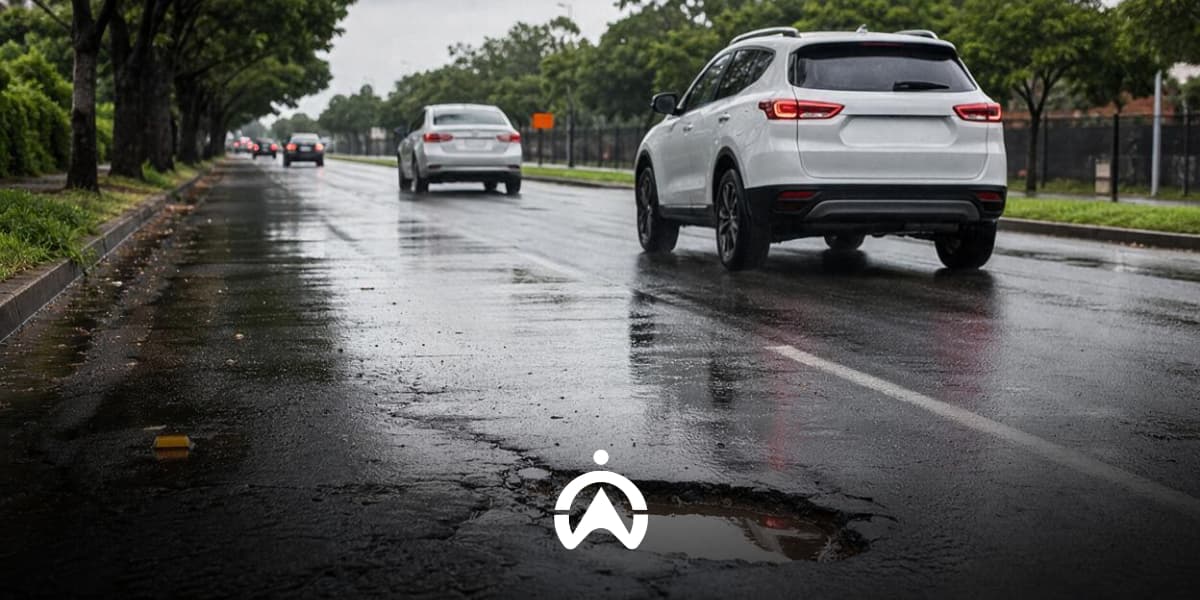
Poor road conditions like potholes, broken streetlights, and missing road markings play a very huge role in accidents. Many drivers are caught off guard by these conditions, which results in them not having enough time to react safely, leading to accidents. If you spot any faulty road conditions, you should report them to your local municipality.
The road rules state that when traffic lights aren’t working, you must treat it as a four-way stop. This means you must come to a complete stop, yield to the vehicle that’s on your right, and take turns passing through the intersection. Any driver who doesn’t follow those rules is at fault.