What Is the Total Cost of Ownership (TCO) for Electric Vehicles for Fleet Companies – Is Petrol Still Better?
Thank you! Your submission has been received!
Oops! Something went wrong while submitting the form.
The total cost of ownership (TCO) for electric vehicles is better than that of petrol-based vehicles. While it’s difficult to see at first (especially because EVs have high initial costs), they’ll ultimately reflect far better long-term benefits and savings for your fleet.
The world of EVs might feel like uncharted waters, but you don’t have to dive into the deep end. Keep reading as we break down and help you understand the TCO for EVs, compare costs across EVs and ICE (internal combustion engine) cars, and see how Cartrack can keep your TCO low and cost-effective.
Key Takeaways:
Even though electric vehicles cost more to buy at first, they save you a lot of money over time
You can expect to spend much less on energy because charging an electric car is nearly half the price of filling up a tank with petrol
Insurance and import taxes for electric cars in South Africa are currently higher because these vehicles need special parts and expert mechanics
Using smart software like Cartrack helps you keep costs low by tracking battery health and planning the best routes to save on power
Is the total cost of ownership for EVs better than for ICE vehicles?
While the initial costs of an EV might seem incredibly daunting, it’s the long-term savings and successes that reflect a lower overall TCO. Not only is this option an environmentally conscious and future-forward one, but it’ll also prove to be a smart financial choice for your business.
What factors affect the total cost of ownership for electric vehicles in South Africa?
The factors that affect the total cost of ownership for electric vehicles in South Africa include the high purchase prices and import taxes, charging infrastructure, depreciation or resale value, and more.
Let’s look at each of these factors:
Purchasing and initial costs: This is the highest cost and is usually the biggest concern for fleet owners and managers like yourself. Purchasing costs are so high because EVs are usually significantly more expensive than ICE vehicles, and there are other costs to consider, like import and tax charges. These costs can be managed and reduced through government-initiated incentives, so always research your options.
You’re also likely going to use a financing plan for your fleet. This is another factor to keep in mind, as big loans with intense interest rates will also determine your overall purchasing cost. All vehicles have import charges and taxes attached, but EVs have higher import duty costs, sitting at about 25%.
Energy: This is the next biggest cost, which is the case for any fleet in the world. For EVs, energy costs are far better and more cost-effective compared to ICE vehicles. Not only is electricity a cheaper energy solution, but it’s also more stable than the ever-fluctuating prices of petrol or diesel. Long-term outcomes will show the positive impact EV energy has on TCO.
If you decide to pair your charging infrastructure with solar energy, you’ll reduce charging costs even further.
Maintenance: Though more specialised in their parts and battery design,EVs are the key to lower maintenance costs. EVs have fewer moving parts; there aren’t oil changes, complex transmissions, valves, belts, or other parts. At most, an EV has a handful of moving parts at a time. This means maintenance is far more manageable and done less often, resulting in savings and a reduced TCO.
Insurance: Insurance will likely be more expensive for your EVs than for ICE vehicles. This is because EVs are made with specialised materials and contain a very high-end battery, increasing their overall costs. EVs also require specialised technicians, who might charge even more than usual for their time.
Licensing: Licensing and vehicle registration fees are necessary for your vehicles to continue operating lawfully on local roads. Permits are also a consideration depending on what types of vehicles you have in your fleet, but this could almost certainly be the case for EVs. These fees need to be paid annually and are applicable to all vehicles—not just ICE types.
Accidents: This is another critical element of TCO for EVs. If your EVs are involved in an accident, chances are the downtime would be quite significant because of the specialised nature of EVs, their parts, and the uniquely skilled labourers required. In addition to this, the repairs or replacement would be costly if you consider the complex internal system and specialised materials.
How to compare running costs of an electric vehicle versus a petrol car in South Africa
You can compare the running costs of an electric vehicle versus a petrol car in South Africa by researching existing data and looking over your own fleet reports. Just as you would for an electrification roadmap, the key to obtaining supporting data is to comb through other real-world examples and information on other electrified fleets.
To make an informed comparison, think about the following:
Fuel vs electricity: Look at fuel use versus electricity usage. Don’t forget to consider electricity tariffs.
Insurance for each vehicle type: Remember that EV insurance plans will likely be more expensive. Either way, think about what you’d want your insurance plan to look like and what you’d need to get a more accurate overview.
Maintenance schedules for each vehicle type: Your schedule for an ICE vehicle would probably include more regular scheduled servicing than that of an EV.
Depreciation and resale values for each vehicle type: Consider the fact that EVs usually depreciate in value faster than ICE vehicles.
Route planning and what it means for each vehicle type: ICE vehicles mainly save on money and fuel when routes are optimised, while EVs undoubtedly need route planning to avoid range anxiety.
What are typical insurance premiums for electric vehicles locally?
Typical insurance premiums for electric vehicles locally are much higher than premiums for ICE vehicles. This is because EVs have specialised, and therefore more expensive, batteries and parts, which also means the labour and specialised technicians are pricier too. It’s understood that insurance for an EV could be anywhere from 10% to 15% more expensive than for ICE vehicles.
Factors that contribute to insurance premiums for EVs
The car’s higher value: EVs are typically more expensive than ICE vehicles, and this is one of the first starting points for an insurance premium. So, comprehensive premiums will have to account for that, especially if an incident occurs and the EV needs to be replaced.
Specialised and trained technicians: Because EVs are still relatively new to the market, they require uniquely skilled technicians, who are usually few and far between. This means mechanics with EV training might charge more for their services.
Batteries and car parts: Much like the trained technicians, EV batteries and parts are unique and specialised, coming at a premium. This also means EV parts might not be readily available and have to be shipped from other countries when needed.
Safety features: EVs tend to have many security & safety measures in place, like crash detection, cameras, and sensors. It’s complicated though. While these features should reduce premiums, they could potentially backfire. EVs are still at a high risk of battery fires and pedestrian collisions.
Car performance: As part of a car’s insurance coverage, an insurer will look at the car’s performance: how fast it goes and how quickly it gets to high speeds. This is a kind of safety review. Because EVs are powerful and reach high speeds quickly, insurers might see this as a hazard, leading to a higher premium.
Is the insurance landscape changing for EVs?
Yes, the insurance landscape is changing for EVs. The EV market is currently expanding in South Africa and across the globe. There are changes in transportation policies in numerous countries. For example, Hong Kong has introduced major tax relief opportunities for businesses that have or are looking to invest in EVs, helping individuals and businesses save exponentially (even up to millions).
South Africa is closely following in these steps, providing incentives and looking towards the future of transportation and logistics. With this increase in popularity, we’re seeing that insurance premiums for EVs aren’t what they used to be, though they’re still higher than ICE vehicles.
Our EV adoption is slower than in most countries, but the demand is still there and continuously moving in an upward trajectory.
Can Cartrack help you reduce costs and overall TCO?
Yes, Cartrack can help you reduce costs and overall TCO for your EV. Thanks to our fleet management software, FleetWeb, you don’t have to be concerned about handling all the admin and wasting business time. Your processes are automated, and you’re equipped with all the essential tools for seamless management. Smarter insights mean smoother operations, reduced damage, and minimal downtime.
FleetWeb is a comprehensive system that works just as well for EV fleets as it does for ICE fleets. Our features help you manage your operations more responsibly and save towards a better TCO.
Here’s how we can help reduce your total cost of ownership:
Fuel management: Our software will monitor your fleet’s fuel use. With our fuel probes, you can keep track of how much fuel is in the tank at any given point. If sudden level drops happen (from acts like syphoning or fuel theft), then you’ll immediately be notified. All of this can help you manage fuel expenses, catch theft or fraud, and understand where waste occurs so you can quickly fix that.
Safety and security: Full visibility and anti-jamming properties are what we offer. We understand that as a manager/owner, you want to know where your fleet vehicles are at all times & be able to monitor the safety of drivers and cargo. Our tools can help you keep a close eye and stay in control at all times.
Additionally, our high-end anti-jamming and recovery technologies will ensure that if a disaster strikes and a vehicle is stolen, our team will immediately take action and be ready to help with the recovery.
Driver behaviour monitoring: Poor driver road habits can mean spending extra. If your drivers are reckless and driving dangerously, this could equate to more fuel being used (because of speeding, taking corners sharply, etc.), increased wear & tear on the vehicle, and general threats to safety.
Our AI camera solutions and driver scorecards ensure you keep a close eye on drivers while being able to coach them with actual records of their scores and footage of triggered events.
Optimisation: From routes to operational processes, optimisation is a major key to saving money. Our software will help your drivers take the most efficient routes when they’re on the road, automate workflows, and make obtaining reports so simple. Optimisation is extra important in the case of EVs; range anxiety can be easily managed this way.
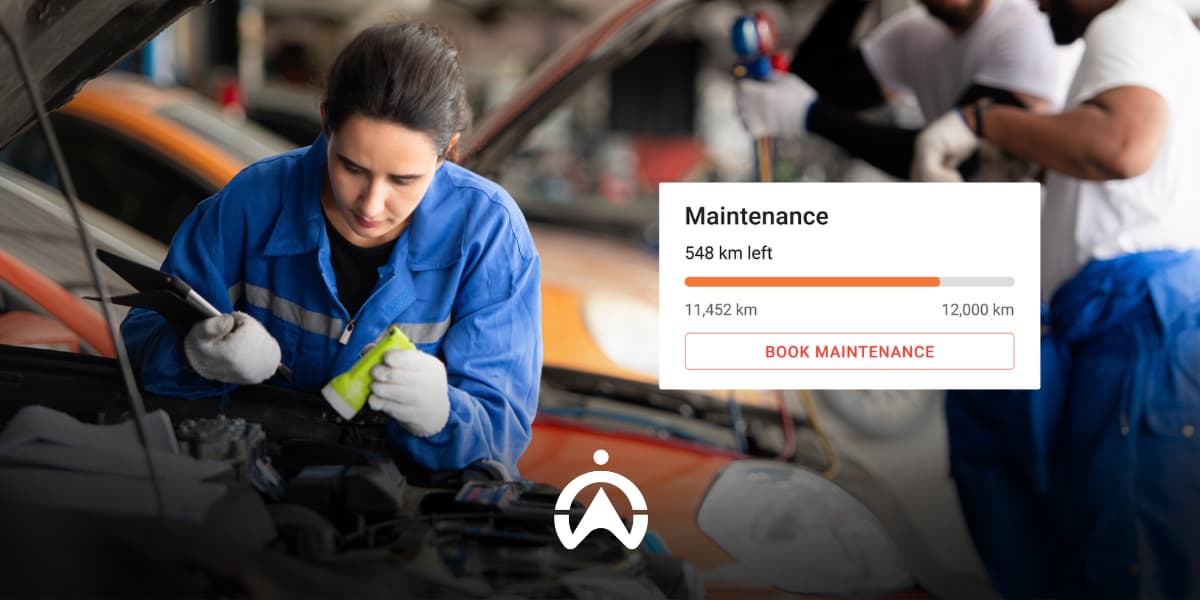
Proactive maintenance: Regular vehicle diagnostics ensure that your EVs stay in top condition. Get notifications on vehicle upkeep and the best scheduled times to service your vehicles. You’ll also get notifications regarding faults or failures. This feature is perfect for ensuring your fleet’s health and avoiding costly downtime.
Final takeaway: EVs are your fleet’s future
In the end, the TCO of electric fleet vehicles is still lower than that of petrol-powered vehicles. Many factors and considerations might throw off your personal verdict, but it’s the long-term successes that are a true reflection of this finding. And the numbers don’t lie!
Understanding the TCO for EV fleets is the key to discovering whether dipping your toes into electrification is something your business is ready for. EVs have the ability to outperform traditional vehicles, and transforming or mixing your fleet could be the key to remaining competitive. If you’re ready to keep your EV’s TCO down, Cartrack can handle that for you.
Call us today to optimise your EV fleet and save on operational costs!
Frequently asked questions for the TCO of EV fleets
Why do EVs lose their value so quickly?
EVs lose their value so quickly because they’re expensive when initially purchased, but there’s also a bit of a mismatch when it comes to the retail demand. Although fleets are keeping the demand for EVs present, interest from private or individual motorists is starting to wane. People are also hesitant to buy second-hand.
How much does EV charging cost compared to petrol?
According to My Broadband, EV charging costs about 40%-50% less than driving a petrol-based car. It’s important to note that exact figures will vary, but the consensus largely remains the same. In this particular case, an EV was going at about R0.91 per kilometre charge-wise, while the individual’s petrol cars cost R1.49–R1.73 per kilometre.
What is the 80/20 rule for electric cars?
The 80/20 rule for electric cars states that EVs should always be charged and operating between 20% and 80% battery, without moving outside of those percentage boundaries. Doing this is said to help manage range anxiety and keep the battery in peak condition.
What is the incentive for electric cars in South Africa?
The incentives for electric cars in South Africa are as follows:
Prices of import duty will be reduced
A general effort to turn to greener initiatives and see changes in the country’s fleets' makeups is made
The White Paper Policy will be enforced, which is centred on adopting EVs & supporting EV production, manufacturing, and skills development on a local scale.
Let the Cartrack team help you understand the TCO for EVs. See how electric vehicles compare to petrol cars in fuel, maintenance, and long-term savings.