
If you’re looking at your fleet maintenance costs and wondering if you’re overpaying for maintenance, we’ve got formulas, calculation tools and guidelines on how to find out. Maintenance is one of those aspects of fleet management that you feel forced to do, but done correctly, it creates smooth operational efficiency and real-time visibility that pays you back for the effort.
A high maintenance budget can mean one of two things: either your fleet is really big and the expenses are necessary, or you’re following reactive fleet maintenance (which costs way more).
If you want to know which of these defines your fleet best, keep reading; and don’t forget to jot down our helpful formulas for working out the lowest fleet maintenance costs.
When you’re running a fleet of two cars, it’s easy to keep track of maintenance costs. It’s when your vehicle count increases that challenges arise. Determining what’s reasonable and what’s not has everything to do with the value your company derives from that vehicle compared to the money you pour into it.
You can be sure that maintenance costs are too much if one of the following is true for your fleet:
Here’s the thing most fleet managers don’t understand. Maintenance COSTS isn’t just about the money you spend to repair the vehicle. It’s also about the money you LOSE when your vehicle isn’t working for you.
During the first few months of a vehicle’s lifecycle, your maintenance expenses should be low (unless you’ve purchased used vehicles). After that, the costs increase. It becomes a question of whether it’s worthwhile to spend money on repairs based on the value that vehicle brings to your company’s bottomline.
Whether you use cars, trucks, vans or electric vehicles, here’s a breakdown of how these repairs go up with time and the lifecycle of your vehicles:
This points to the fact that your costs for fleet maintenance will gradually increase as the months go by. And no matter how much fleet experience you have, guessing these expenses accurately simply won’t be possible.
The only way to get the best costs overview (comparing what you pay versus what you SHOULD be paying) is to rely on algorithmic software to work it out for you.
But before we look at that, here are some beginner formulas you should know as a fleet operator.

These formulas highlight whether you’re spending more than you should on your fleet’s maintenance. You can do them right now! But you’ll be a lot more accurate if you just speak to us about measuring valuable data and getting the insight necessary for better maintenance-related decision making.
Every fleet operator should understand how much each vehicle costs for every kilometre travelled. This factors in fuel, maintenance, insurance and even the value of the vehicle itself.
Take your costs: fuel per km + total maintenance + insurance + (purchase price - est. resale value). Now divide that number with the total kilometers traveled.
This formula can be done over a month, or even over the entire lifetime of the vehicle. We recommend doing both so you can see if your vehicle is delivering an ROI that’s feasible.
This is where most fleet managers come short. Sometimes your “costs” present themselves in the form of money you COULD HAVE made, but didn’t. If you want to make sure you’re bringing in the highest potential income, make sure your vehicles are always running.
In other words: avoid downtime any way you can!
FLEET BENCHMARK: You should be spending 4 times more to PREVENT breakdowns than you do on unplanned maintenance.
If you want to know how much maintenance is REALLY costing you, try this simple formula:
Divide your scheduled maintenance costs by your unplanned (emergency) maintenance costs.
If your result is lower than 4, you're following a reactive maintenance strategy rather than a PROACTIVE one. This figure reveals exactly how much more you spend on preventative care compared to emergency repairs.
Yes, even though Cartrack can help you lower your reactive maintenance costs by as much as possible, unplanned repairs will still happen. This means you should still budget for them. But how much?
This formula shows you how much you’re actually losing because of downtime. The point of working this out is to come up with a reasonable reactive maintenance budget at your own discretion.
Take the revenue of your daily target and add your daily overheads to the number. Now multiply this number with the days your vehicle isn’t running.
When your vehicle is stuck in the workshop, your business gets hit in two ways: lost income AND wasted expenses. That’s why it’s worth setting aside some of your maintenance budget toward emergency repair costs.
This formula is an eye-opener for fleet managers, because it shows them exactly why PROACTIVE maintenance is better.
To factor maintenance into your fleet costs, opt for the least disruptive integration of maintenance management software. Maintenance itself is disruptive enough, so use a system that helps your fleet ease into its new repair schedules. The software should plan for downtime and predict when vehicles need servicing (proactive approach).
The word "disruption" in fleets usually refers to loss of income. According to PRWeb, more than half of small and mid-size companies said they lost up to 15% of their income because of delays in their regular supply chain. When vehicles are down, the whole business suffers!
The above statistic proves how important it is to predict fleet maintenance needs rather than react to them. Cartrack operates in 23 countries and helps fleets do exactly that. Our software works with AI to not only schedule the servicing of your vehicles, but give you fair warning when important components are close to failing.
The message you should be getting loud & clear is that reactive maintenance is costing you a lot more than you think. Proactive fleet maintenance is how successful companies of all sizes preserve their profits and get the most out of their vehicles.
This was proven during a study conducted by the American Transportation Research Institute. They found that unexpected downtime costs fleet managers more than $450 (around R7 000) per day for every truck because of lost productivity alone.
And worse, this excludes the repair bills themselves!
This begs the question, “What is preventative maintenance, why is it better, and how can I get it?”
Preventing vehicles from breaking down in your fleet in the first place should be the main goal here—and this is known as preventive maintenance. Traditionally, this has been done in various ways that are still important; namely, inspections, driver coaching and set servicing schedules.
But we’ll show you below how to automate these and save hours on your regular fleet maintenance tasks!
Predicting maintenance needs is great, but what about delaying that maintenance from the start? When you buy a new vehicle, you have the opportunity to extend its lifecycle by as much as possible, and this is where fleet management software really shines.
Not only does Cartrack help you manage maintenance, we make sure you spend less on it through comprehensive driver coaching, vehicle inspection scheduling, route optimisation, and AI analytics.
Persuading your drivers to get on board with vehicle inspections isn’t always easy.
But the same fleet software provider that has developed predictive maintenance (Cartrack) also allows you to manage your inspections digitally. This way, none of your drivers can bypass this important step to reducing maintenance needs in your fleet.
Our platform also allows you to use the data feeds you receive and gamify them, creating incentives for your drivers to keep up their inspection protocols.
When your vehicles are regularly inspected, you’ll get earlier notification if maintenance needs are required. Your staff will also begin to realise that those same inspections are for their own safety, not just another task on their list of things to do.

AI doesn’t just predict when vehicles need maintenance. AI is actually used to prevent the need for lots of vehicle service calls by harnessing telematics in clever ways that benefit your company budget:
Not every road your drivers travel on is going to be kind to tyres, shock absorbers and suspension systems. For this reason, there’s one more technology that’s well worth mentioning in your fight against high servicing costs.
Route optimisation: Cartrack’s navigational software beats those free apps hands down, because it delivers dynamic route optimisation in real-time, based on live events and traffic situations.
Experts in the fleet industry are already using many of these technologies—and some of them might even be your competitors.
Use one of the technologies mentioned above, and you’ll start saving on your servicing costs. But use all of them combined, and you’ll see massive savings, stronger ROIs, and longer-lasting vehicles.
Demo them all at no charge to see which ones will work for your fleet maintenance needs.
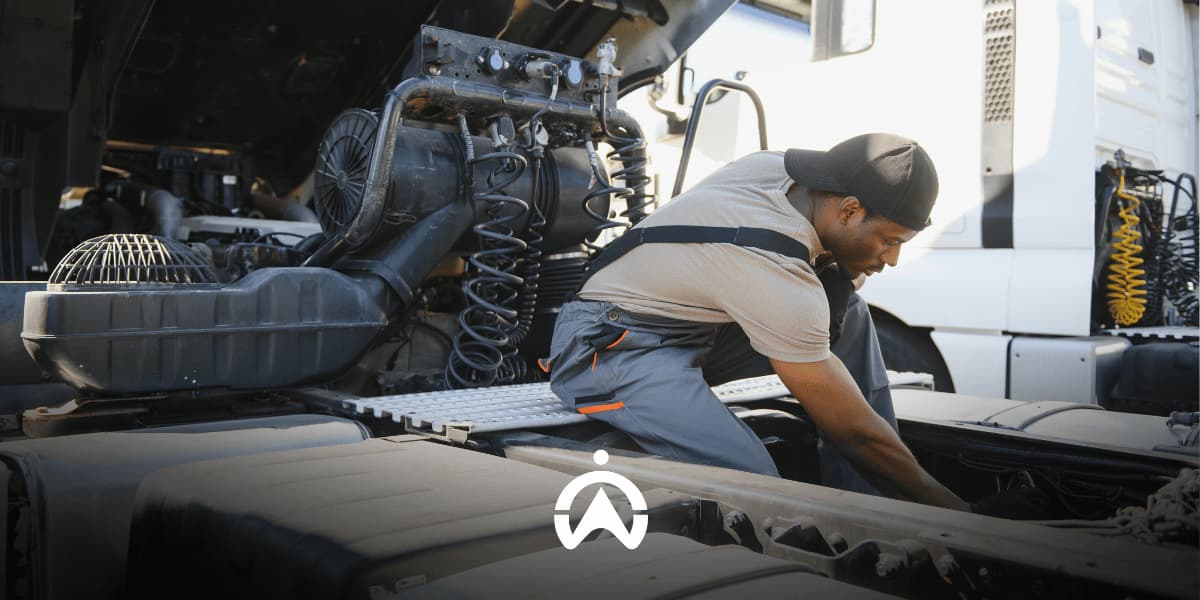
Find out if you’re paying too much for your fleet’s maintenance, and how to make sure you never go over your budget in future.