
The best bus fleet management software should always include top-of-the-range technology that specifically impacts bus companies and their drivers. This would include vehicle camera security, route optimisation abilities, and intuitive scheduling. Ultimately, the best bus fleet management software in South Africa is depicted by how passengers view your brand.
Of the approximately 25 000 buses in South Africa, around 19 000 of them are assigned to the public transportation of passengers, according to SABOA. This means that the bus industry in SA is one of the many important supporting structures for the country’s economy.
Cartrack has its Fleet Management Software (FMS) active in many public transportation entities, because we’ve designed it to solve a number of common problems faced by these companies. In this article, we’ll look at those problems and show you how FMS successfully mitigates them.
Modern-day fleet software for buses should be able to streamline your scheduling, keep your passengers safe, and prevent late arrivals at bus stops. It should also help to prevent vandalism of buses, regulate fuel use, and gradually increase the growth & profitability of the bus service in question (whether private or government-run).
At the heart of bus FMS should be the desire to mitigate problems that everyday bus drivers, bus company stakeholders, and even bus passengers face.
What are these problems? Glad you asked… keep reading.
The problems faced by bus companies today include unhappy customers (passengers), which is usually caused by late pickups, scheduling confusion, and even physical danger. Overall, these problems lead to financial issues too, because profitability is affected due to the gradual development of a bad reputation.
Cartrack deals with bus companies on a daily basis, and we’ve summarised the problems they face within 10 main points. Which of these 10 have you experienced while managing YOUR bus or shuttle service?
Consistently late pickups form one of the top problems faced by bus companies. Drivers simply can’t get their timing perfect every time due to traffic, bad road conditions, or bad planning. If this happens often enough, the brand becomes synonymous with UNRELIABILITY, leading to passengers opting or preferring other bus brands.
Passengers often rely on bus transport for work arrivals, school drop-offs, and important appointments. If the drop-off is later than scheduled, it greatly disrupts the plans of each passenger. Word spreads quickly among bus passengers, and new potential customers will be told to avoid a certain bus brand if possible—and this can SINK a bus company fast!
When multiple buses are assigned to an identical or similar route, it can lead to confusion when stops conflict with one another. This also happens because of other bus companies whose stops may conflict with those of your drivers. Without a smooth flow of stops and dropoffs, time is wasted, passengers are frustrated, and money is lost.
Bus service fleet managers often struggle to manage the backlash that comes with risky driving within their team. No matter how carefully they vet drivers before employing them, risky driving still takes place within the bus industry. If it happens often enough, eventually passengers get hurt, vehicles get damaged, and insurance costs skyrocket.
Not a stranger to any industry that uses road transport, high fuel costs are among the biggest issues bus companies face today in South Africa. The stopping and starting of vehicles in urban settings can be murder on petrol & diesel tanks, so conserving fuel is a MUST if bus companies want to see viable profits.
The safety of bus passengers on every trip is an essential part of any bus or shuttle service. Drivers have a responsibility to keep their patrons safe, but this isn’t always easy. Incidents tend to happen in small confined spaces, and passengers experiencing theft is another problem bus drivers deal with daily.
Because of how large they are, parking a bus is always a risk. Leaving it unattended isn’t always an option, because vandalism is a real problem—especially in particular areas. Insurance prices can go up if buses operate in unsafe areas, and bus companies need ways to lower their insurance costs while upping their vehicle safety.
Buses are held to a higher standard compared to many other types of road vehicles. They’re large & bulky, and have the potential to cause devastation on our roads. Keeping buses well maintained and road worthy is often a full time job! If a bus gets stopped by road authorities due to non-compliance, this just exacerbates the problem more because of downtime.
You might think running a bus service or shuttle company is a profitable endeavour, but considering the challenges we’ve already listed above, it’s not always as cut-and-dry as it seems. Many new bus companies start only to fail years (or even months) down the line. In today’s South Africa, how can bus companies turn enough of a profit to be able to grow and expand their fleet of buses?
Considering theft, safety, bad driving, and unreliability in bus travel, passengers are sure to have their say. With online reviews now a popular way to determine good service, some bus brands are gaining a reputation that leads to them being avoided. There’s always a competing bus company willing to replace a bad one, so keeping passengers happy is a MUST!
When we hear about all these challenges, it might seem impossible to run a bus service effectively. But the truth is, technology has come a long way to massively improve the bus industry in South Africa. Fleet management software for bus fleets is designed to solve these problems. Feel free to contact a consultant at Cartrack to see exactly how, or keep reading.
Bus companies will benefit from fleet management software in the following ways:
Cartrack has developed fleet management software with bus companies in mind. There are a number of helpful features designed to make the day-to-day fleet management of a bus company easier and more profitable.
As you read further, notice how each of the following directly tackles the list of challenges mentioned above. Ask yourself, “What’s the biggest challenge I have within my bus service right now?” Now, let’s see if the solution can be found!
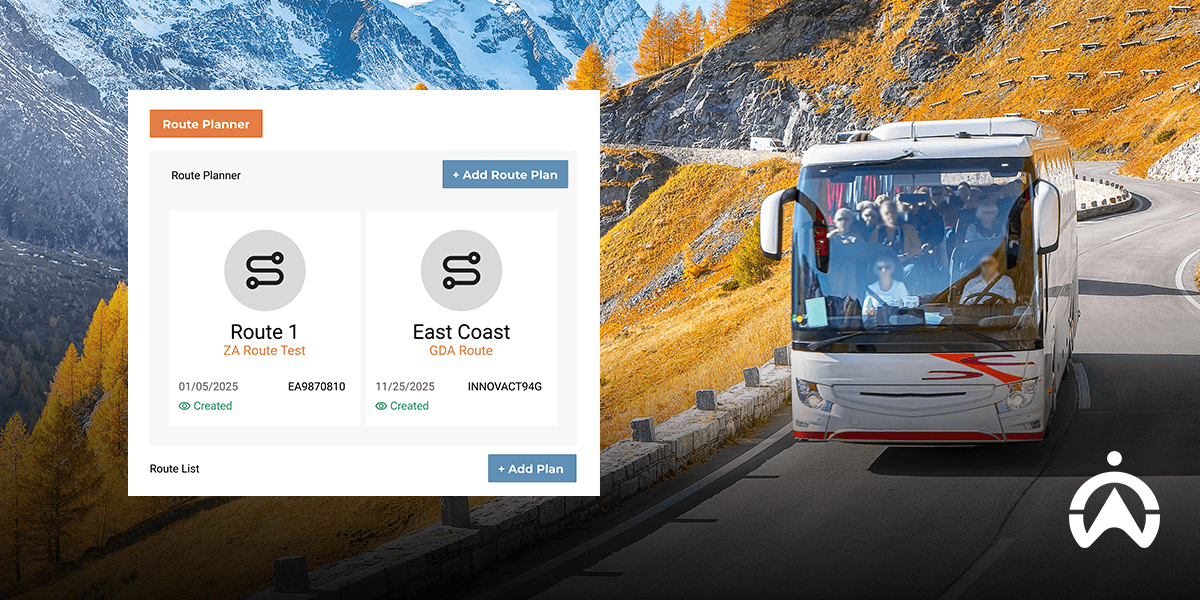
To solve the issue of schedule mix-ups, late pickups, and late (or missed) drop-offs, Cartrack has developed software that gives you a big-picture view of all your vehicles, who’s driving them, and where each one is scheduled to be.
This allows you to foresee late arrivals, reroute buses, or re-assign drivers at a whim. The software works with AI, and automates most of the thinking for you, allowing you to make better scheduling decisions as and when they matter most.
Avoiding lateness with buses is better than managing it when it happens. Route optimisation analyses traffic, roadblocks, and bad road conditions to give your bus drivers the best possible routes from the get-go. This helps them to bypass all of those pesky delays and get more passengers to where they need to be.
Cartrack has developed industry-leading AI dashcams and vehicle cameras that work to monitor all angles of your bus. This includes the inside of the bus, showing you the driver as well as the passengers. If an incident occurs—whether an accident or something among the passengers—these cameras will pick it up and archive it in case you need it for insurance or the authorities.
Insurance companies will also appreciate this extra level of security. Often they’ll lower your insurance premiums if they know you have this feature, because it makes their claims process so much easier and cheaper.
The chance to save on fuel costs should grab the attention of any bus fleet manager. It’s at the top of your expense list and should be reviewed often if you want to turn a decent profit. Some fleets have reported a fuel cost reduction of 24% after using Cartrack’s fuel monitoring devices and software. From fuel sensors to fuel management software, bus companies like yours can greatly benefit!
Keeping your buses on the road is just as important as running them affordably. If a bus is in the shop for maintenance, it can be days worth of income losses. Not to mention the people who rely on that bus to get to where they need to be, which also affects your reputation.
Cartrack uses AI to predict when a bus will need maintenance ahead of time. It does this by analysing the vehicle’s current condition, its last service, and how often it’s on the road. By predicting maintenance instead of scheduling it, your buses will have less downtime and run better throughout the year. Predictive maintenance also allows you to mitigate downtime by scheduling another bus to replace the one that’s being maintained.
It’s also worth mentioning that this intuitive way of scheduling maintenance will keep your buses compliant with SA road laws. That means fewer fines for you, and less chance of buses being impounded.
As we’ve already mentioned, bus driver behaviour matters. The safety of your bus passengers and those who encounter your drivers on the road are put in danger every time your drivers do something reckless. Unsafe driving is mitigated by targeted monitoring that highlights driver coaching.
How does it work? Drivers are rated according to how fast they drive, how harshly they take corners, and even what they do while they drive. Distractions, smoking, eating & drinking, and unsafe driving are immediately flagged in real-time, allowing you to target your driver coaching to keep them compliant.
From a customer experience perspective, fleet management software has a number of benefits that directly impact how passengers perceive your bus brand. If brand reputation is important to you, then take a look at how much you’ll benefit from having Cartrack as your bus fleet management partner.
Bus-specific fleet management software can be distinguished from regular FMS in the features you choose. Cartrack allows you to tailor your FMS features so that you only pay for what you use. This means you can pick FMS features based on what works for your bus or shuttle service and optimise the benefits most important to you.
It’s almost certain that FMS eventually pays for itself. Not only can it save your bus or shuttle service thousands of rands every year, but it also allows your company to grow and develop through fleet expansion and higher profits.
Here’s a quick overview of how FMS pays for itself within your bus or shuttle service:
You should choose fleet management software for your bus service that caters to the challenges you and your drivers face each day. Use a company like Cartrack that stays at the forefront of bus service management software when it comes to AI-integration, camera quality, telematics device technology, and customer service.
Discover the best bus fleet management software for South African operators to improve safety, scheduling, tracking, and fleet efficiency.

.jpg)