Tracking carbon dioxide (CO₂) emissions for each vehicle in your fleet all by yourself can take hours, if not days. With so much else to do, you need a system to help speed this up and have you worrying less about your fleet’s fuel consumption rates.
Out of the many different CO₂ tracking tools available on the market, the one you choose should align with your fleet’s needs and long-term goals.
Today we discuss CO₂ tracking tools, how they work, their importance, and why getting on a fleet management platform works better.
To keep track of your fleet’s CO₂ emissions, you need IoT devices and fleet management software. An IoT (Internet of Things) device is hardware that’s built to collect and transmit data about its surroundings. In the fleet management world, this is achieved by vehicle GPS telematics devices and fuel sensors.
Fleet management software helps you understand the data that comes from the IoT devices and calculates your fleet’s CO₂ emissions for you.
Tracking your fleet emissions helps you see if you’re meeting the required standards, but what happens if emissions are high? How do you change that? If you want to stay on track and avoid penalties, you have to be proactive.
This means putting measures in place that’ll help steer your fleet operations in the right direction. It involves closely monitoring drivers, vehicle health and planning for future purchases.
Here's what we mean:
If you want to run a sustainable fleet, you must start by monitoring poor driving habits like speeding and long idling. These habits increase fuel intake by a significant amount and therefore increase your fleet’s carbon emissions.
Fleet telematics devices are very helpful when it comes to this because they collect data on the precise habits of each driver. You’ll know exactly which driver needs training on fuel-efficient driving habits, and you can book coaching sessions for them based on individual behaviour.
Once there’s a change in how they behave, you’ll see an improvement in fuel usage and your fleet’s carbon footprint.
Although carbon dioxide is the most common greenhouse gas, there are others that can come from food spoilage. So if you run a cold chain fleet, you need to be mindful of that too. To avoid this, you must ensure your drivers perform daily inspections of the refrigerated cargo areas before and after every trip. They should check things like whether the cooling system works optimally, if there are any visible tears, and if doors can close properly.
You can also get temperature monitoring sensors to get real-time alerts of any temperature fluctuations so you can inform drivers and avoid compromising food integrity.
As a fleet manager, you must think for the future. More fleet managers are slowly introducing the use of electric vehicles (EVs) into their fleets and so should you. Your carbon emissions will drop drastically once you have EVs, so this should be one of your long-term sustainability goals.
The best way to do this is by assessing all your current vehicles to see which one needs an upgrade, and for the next upgrade, get an EV. Over time you’ll have more of your drivers operating vehicles that are environmentally friendly.
A great way to make fuel efficiency a culture within the company is by creating a leaderboard for your teams so they can see whose driving is more fuel-efficient. You can reward drivers who are doing well and give more attention to those who are underperforming. Through these scores, you’ll find out what most drivers mainly struggle with and organise training. Using leaderboards to drive performance will motivate your team instead of making them feel unfairly targeted.
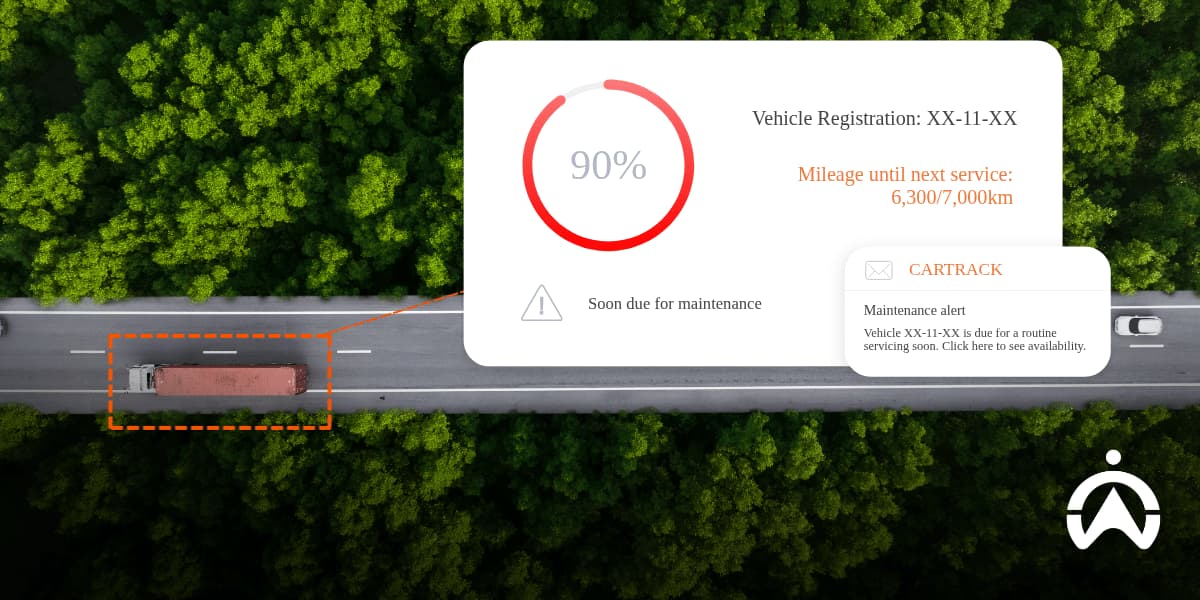
Vehicle wear and tear is another factor that contributes to the increase in fuel consumption. To avoid this, you should get a fleet system that can perform vehicle diagnostics and report mechanical faults so you can fix them before they cause further damage. The system also needs to help you with setting reminders for service dates. You must also ensure drivers do their pre-trip vehicle inspections to look out for any faults.
According to Stats SA, the annual global emissions of carbon dioxide from fossil fuels and industry reached 38.11 billion metric tons (GtCO₂) in 2025. This is a 0.87% rise, which is the highest since 1990. The biggest contributors are China and the USA.
Out of 207 countries, South Africa ranked 15th highest for CO₂ emissions in 2024, exceeding countries with much larger economies like the UK and Italy. This is according to research by Worldometer. South Africa produced about 440 167 752 tonnes of CO₂ emissions, which calls for drastic changes from South African individuals and businesses. This is why we’re now seeing the implementation of stricter laws regarding this issue.
In January 2026, we saw a rise in the headline carbon tax rate. It went up by 31%, from R236 to R308 per tonne of carbon dioxide equivalent (tCO₂e). And this April, the government introduced a penalty of R640 per tCO₂e for emissions that exceed the assigned carbon budget.
According to Polity, all companies that emit more than 30 000 tonnes of greenhouse gases must submit to annual targets and report on compliance and future plans to reduce emissions. Failure to do so might result in executives facing fines between R5 million and R10 million, and imprisonment of up to 10 years for first- and second-time offenders.
Manually calculating your fleet’s CO₂ emissions can be a tedious process, and the chances are they won’t be accurate. At Cartrack, we give you CO₂ emission reports at no extra charge if you’ve already signed up for our fleet management system. With us, filling out carbon taxes and meeting your sustainability goals will be less of a hassle.
Here’s how our system works:
For Internal Combustion Engine (ICE) vehicles, our systems calculate the amount of fuel each vehicle consumes per trip. But the results are based on a three-step fallback, which means there are three ways to generate a report based on what you have.
Although electric vehicles don’t release carbon dioxide, they also have an effect on the environment through the use of grid electricity. For that reason, you also need to watch the amount of energy your electric vehicles consume and submit reports for that.
To help you with this, we’ve got EV emissions reports. They’re calculated in a similar way to fuel emissions in terms of priority tiers, where you’ll need to specify details of the vehicle; in this case being battery capacity and each vehicle's average consumption (kWh/100km). If not, the system will use a default universal average of 15 kWh/100 km to calculate your fleet’s emissions.
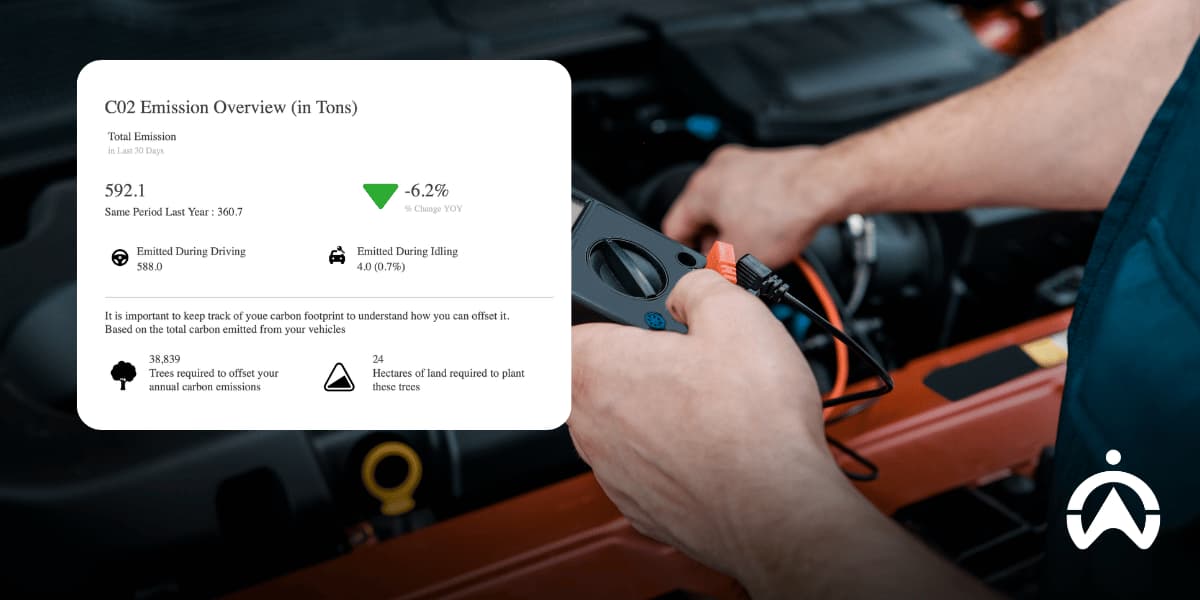
To ensure you always meet industry compliance standards and avoid getting penalised, we also provide you with tools that help you reduce your fleet’s greenhouse gas emissions. You can get detailed reports on fuel consumption, driver behaviour, and vehicle maintenance, helping you encourage a fuel-efficient culture within your teams.
Here are some of our top features for fuel efficiency:
Through the use of fleet telematics devices, you can access detailed reports of poor driving habits like speeding and excessive braking, which increase fuel intake. You can also track engine idle time more efficiently using our detailed reports, which show exact idle hours of each vehicle. This way, you can address your concerns with drivers and educate them on the importance of fuel-efficient driving.
You’ll have access to detailed fuel consumption reports showing fuel usage for each vehicle per litre and per kilometre. This helps you notice trends within your teams and see what needs to change so you can save costs.
The Cartrack driver coaching platform is a feature available on our fleet management software that helps you identify drivers that need coaching. This platform provides a report on the number of times each driver repeated the same actions and the patterns of each team.
As a way to motivate drivers, you can also monitor driver behaviour through our driver scorecard system, which rates each driver based on their daily habits. Every driver starts on 100 points, and the points go down with each offence. You can use this system to reward and incentivise those who are showing good behaviour.
To ensure good vehicle upkeep, we’ve got predictive maintenance technology that monitors vehicle compartments and gives you a heads-up of upcoming maintenance needs, like worn-out brakes. We also have a feature where you can set reminders for each vehicle maintenance date. You can set these reminders according to different criteria like mileage and time, and also state how far in advance each reminder should be and how many times it must repeat. Our vehicle maintenance solutions help avoid high fuel consumption due to worn-out parts.
To ensure your temperature-sensitive goods never cause environmental issues, we’ve got real-time temperature monitoring sensors that you can place in your refrigerated cargo compartments. You can set limits for drops or increases on our system, and if the temperatures go above or below that, you’ll get alerts.
We’re the experts in everything fleet management-related, and you can trust us with helping you meet your fleet’s compliance requirements and save costs. Contact us today, and have one less thing to worry about.
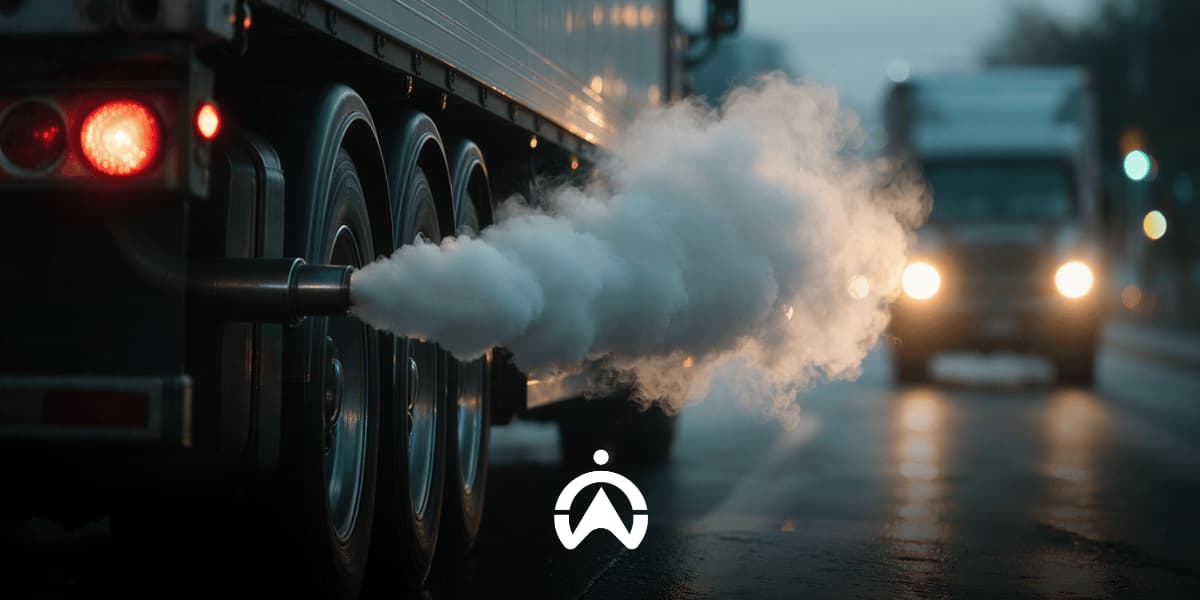
Find out which tools you need for CO₂ tracking, what the new laws regarding carbon taxes are, and how we can help you meet your compliance goals.