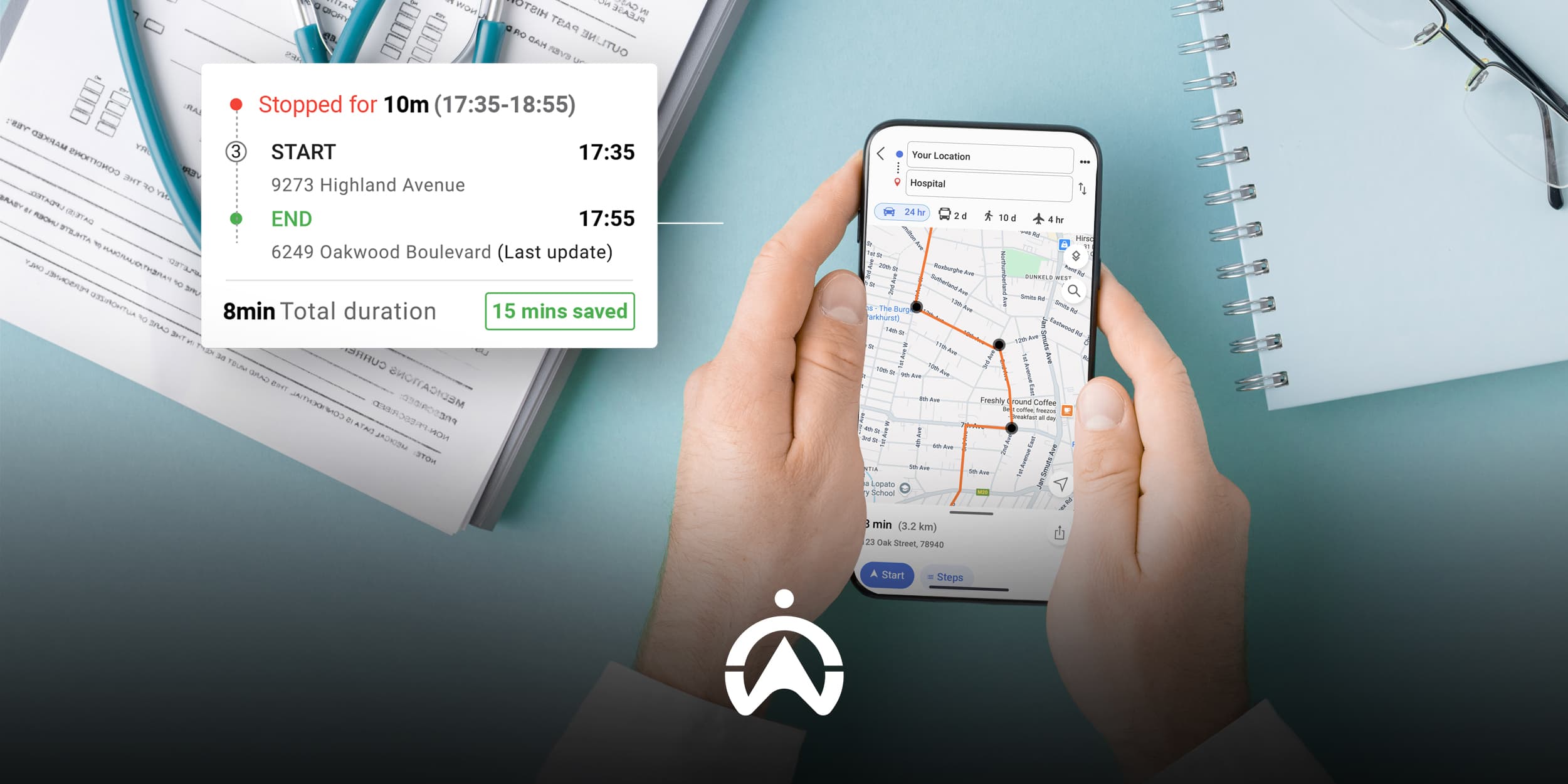
Looking for answers about field service software and how it helps in field health services? You’re in the right spot! Field service software plays a vital role in healthcare by managing staff in the field and keeping in touch with patients. These smart tools track staff locations and provide real-time updates.
In our FAQs, we'll cover how field service management software works and how it can help you streamline your mobile healthcare operations.
You can track and manage the specialised medical equipment that your field staff carry by using field service management software that has real-time visibility and asset tracking. This software connects equipment to specific vehicles, jobs, and staff, enabling managers to monitor location, usage, availability, and service history all from one platform.
The best mobile workforce solution for the mobile healthcare industry is one that offers smart scheduling, real-time tracking, route optimisation and mobile workforce management. This type of solution, like the one we offer at Cartrack, helps healthcare facilities keep tabs on their staff and their vehicles, ensuring that they stay connected with patients.
The three key elements of field service management (FSM) are scheduling and dispatching, work order management, and real-time communication/mobile access. Cartrack seamlessly brings all these elements together on a single platform, giving you complete operational insight.
Field service management software really streamlines things. It helps you schedule and dispatch more efficiently, gives you real-time insights into your field staff, cuts down travel time with smart route planning, and lightens the admin load. Plus, it boosts service quality, accuracy, and decision-making with centralised job management, mobile reporting, and useful analytics.
FSM software helps you deliver services on time with its smart scheduling tools, real-time communication, navigation support, and inventory management. This software optimises the time between a service request and its execution, ensuring no scheduling hiccups, because technicians have all the info they need at their fingertips.
You can boost patient communication about arrival times by using an FSM system (like the one from Cartrack) with real-time tracking and automated updates. This setup allows you to provide accurate ETAs and notify patients about any delays, keeping everyone in the loop and reducing no-show rates.
FSM software helps organisations shift from reactive scheduling to proactive patient care by using real-time data, smart scheduling, and live visibility of your field teams. Healthcare providers can spot delays, prioritise urgent cases, tweak schedules at any given moment, and communicate updates early. This means patients get prompt care instead of last-minute responses.
Yes, most definitely! At Cartrack, all of our solutions (including FSM) are made for small businesses and can easily scale as you grow. We provide flexible, budget-friendly packages that fit the unique needs of your company.
Field service management solutions reduce the safety risks faced by solo clinical practitioners when they visit patients at home. With real-time location tracking, check-in times, and status updates, these tools keep everyone informed. Supervisors can easily monitor visits and quickly respond to any delays or unexpected issues.
Cartrack’s FSM system lets you keep tabs on the care provided to patients with real-time updates on job status, proof of delivery for e-commerce, and visit histories. You can also check timestamps, comments, images, and completion details to confirm that patient visits happened as planned and followed the required protocols.
Cartrack’s field service management software makes handling cancellations a breeze. It lets you reschedule on the spot and keeps communication flowing between management and mobile staff. Dispatchers can quickly change workflows, ensuring that mobile staff and customers get timely updates.
Cartrack's field service software can roll out quickly thanks to its cloud technology. However, the speed depends on a few things, like how many vehicles you have, how well it integrates with your current systems, and the accuracy of your data. If you need to install hardware, that usually takes just a few hours, but getting the whole system up and running—including setup, integration, and training—can take a bit longer, depending on your business.