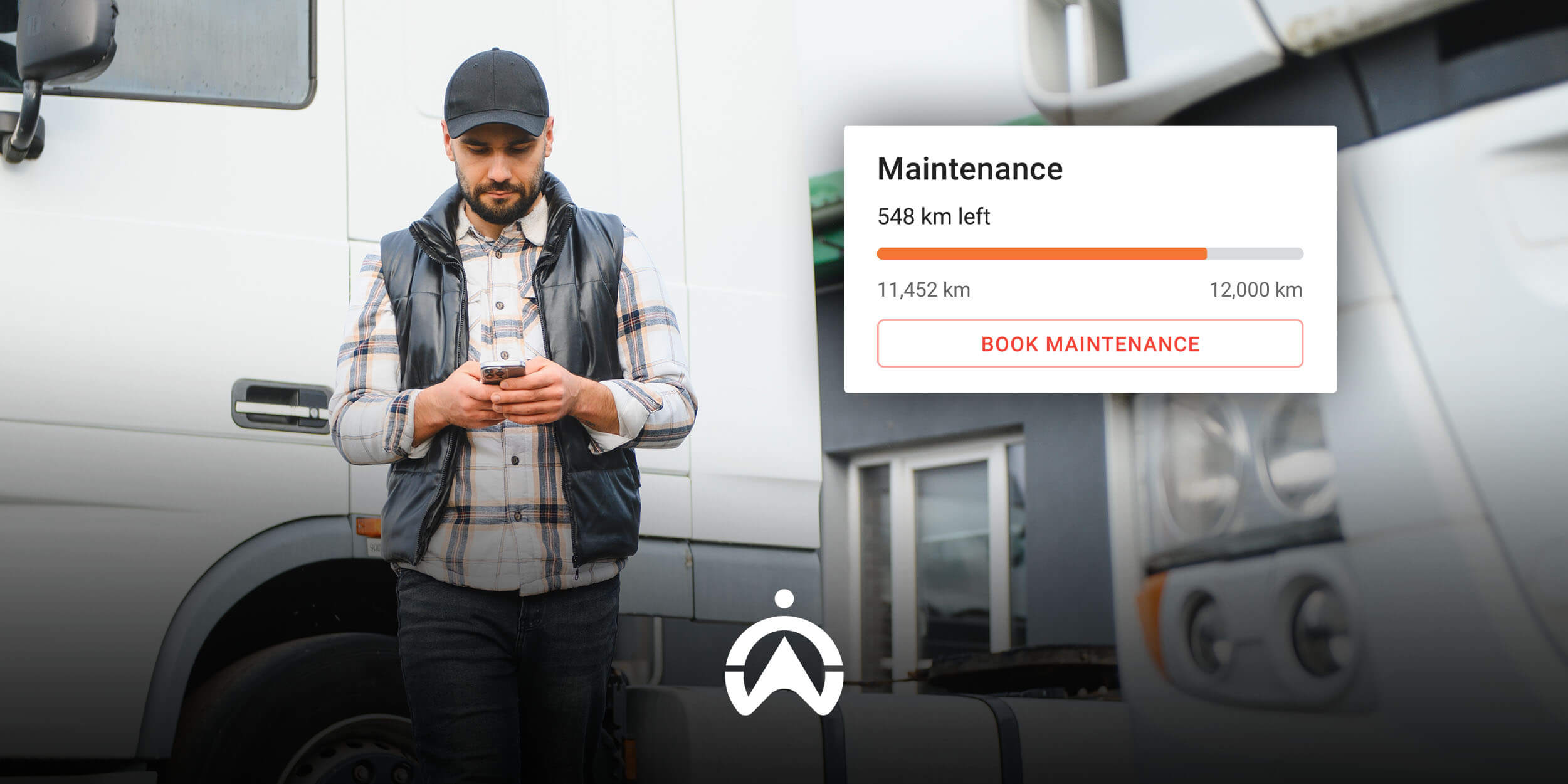
Imagine if you didn’t need a mechanic to tell you how a vehicle’s engine was doing, or that the brakes needed attention. Wouldn’t that save you a bunch of time and money?
Not everyone in the fleet industry knows (or has even heard) about predictive maintenance software that’s AI-driven. It’s a technology that’s revolutionising fleets all across South Africa, and we’ve gathered some of your common questions and provided answers to them here.
Yes, AI can be used to actually make your vehicle maintenance predictive. This means that instead of sending your vehicles in for services based on guesswork and a set schedule, you’ll only send in vehicles that need specific maintenance carried out. AI works to auto-generate a more dynamic schedule based on real-time vehicle diagnostics, which minimises downtime, makes your job easier, and saves you on maintenance costs.
GPS tracking gives you a lot of useful information that can be used to assess your maintenance needs, but it won’t read your vehicles’ diagnostics. AI predictive maintenance is a separate technology that evaluates the health of each vehicle and automatically schedules maintenance time for each vehicle based on wear & tear.
Yes, this predictive AI fleet software can accurately predict when tyres should be replaced based on trip duration and the time since its last tire change. It can also read when your brakes need work—whether it’s the pads, the discs, or the braking system itself.
You should choose Cartrack’s predictive maintenance software because we pioneered the concept of predictive maintenance software before it was mainstream. We’ve had lots of time to refine the technology and offer comprehensive 24/7 support for any of our customers who use it.
AI predictive maintenance works by translating a bunch of vehicle data into an easy-to-follow schedule that helps you plan your maintenance and downtime better. Using IoT (Internet of Things) hardware, Cartrack’s software gathers vehicle diagnostics and interprets it for you to help you make better vehicle care decisions.
The hardware that’s commonly used to gather the data needed for predictive maintenance is the Cartrack CANbus clamp. This is a device that attaches to your vehicle’s central processing unit (CPU) to read the condition of its components. From there, the data is fed into the software, where AI arranges it into usable information for fleet managers.
The biggest benefit of AI in predictive maintenance is its ability to automate reports and schedules so you don’t have to (which saves you tons of time). Another benefit is that it’s free from human error, and accuracy matters when it comes to diagnosing your assets properly.
Avoiding tow-ins and the need for roadside assistance is one of the main objectives of an AI predictive maintenance strategy. The point is to manage vehicle health PROACTIVELY, not reactively. By preventing vehicle problems before they happen, you should start seeing fewer instances of tow-ins and roadside service calls among your drivers.
Yes, because your vehicles are getting the attention they need exactly when they need it, they should enjoy extended longevity. Achieving this ultimate result should also end up costing your company much less, because you no longer service vehicles unnecessarily.
If your insurance covers vehicle repairs and roadside assistance, then it’s possible to use AI data from predictive maintenance software as leverage to negotiate better premiums. This is especially true if you have a large fleet of multiple vehicles, because the risk of breakdown instantly lowers when you implement smart servicing schedules.
AI-powered predictive maintenance software is actually PERFECT for last-mile delivery vans, because stop-and-go driving accelerates the wear & tear of the vehicles. The system identifies stops, idling, and general trip data to give you the best prediction for when those vans need servicing in a particular area.
Yes, Cartrack’s software is designed to save fleet managers hours on tedious maintenance scheduling. It does this by automating your schedules while giving them a comprehensive overview of what’s happening. It can also suggest replacing vehicles with backup ones to reduce downtime so that your fleet keeps running optimally.